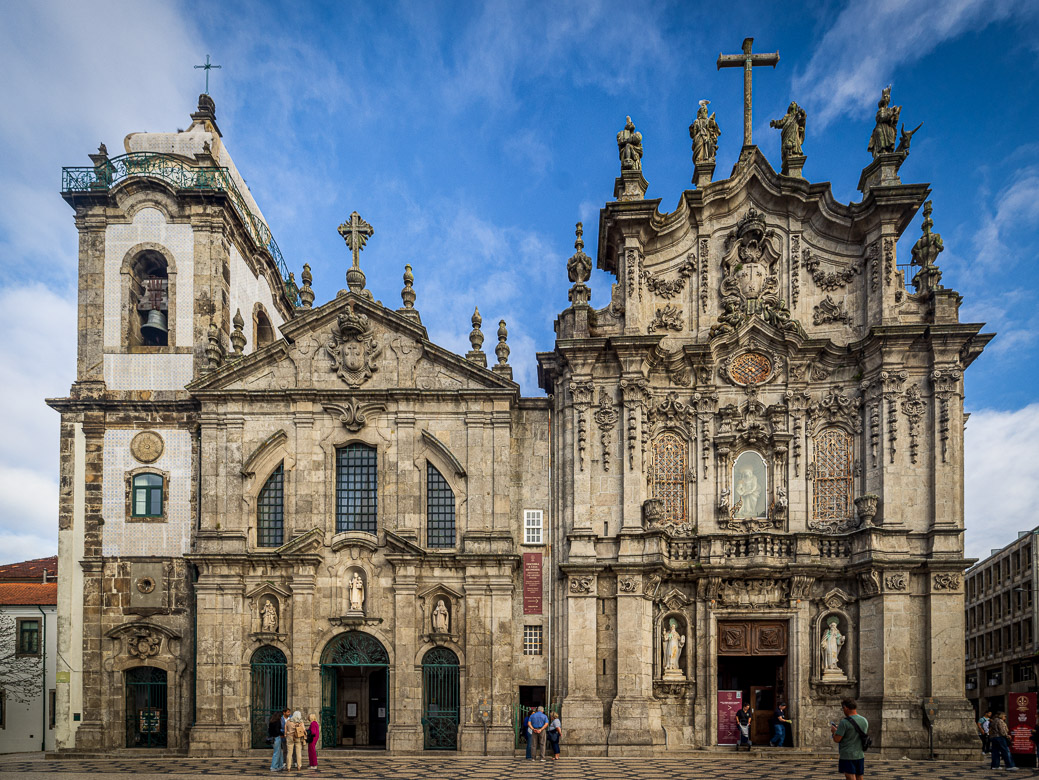
Igrejas do Carmo e Carmelitas look like an enormous church, but it is actually two different churches. Carmelitas church, to the left was part of a convent and built in the 17th C.
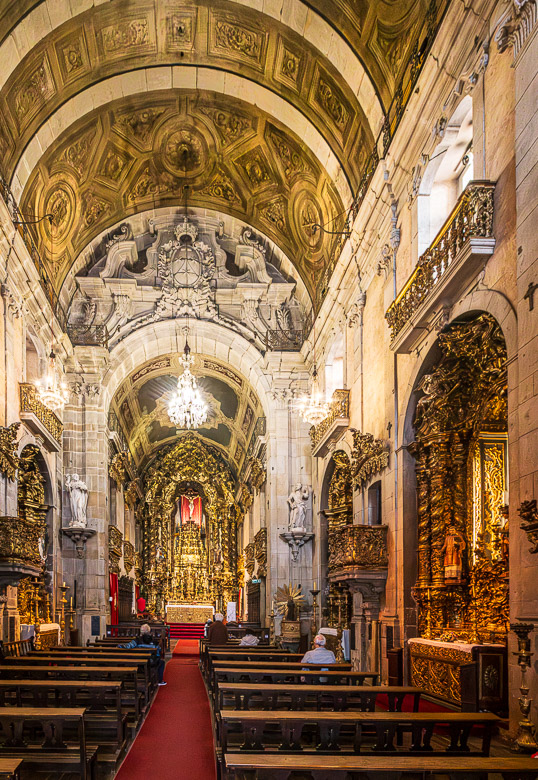
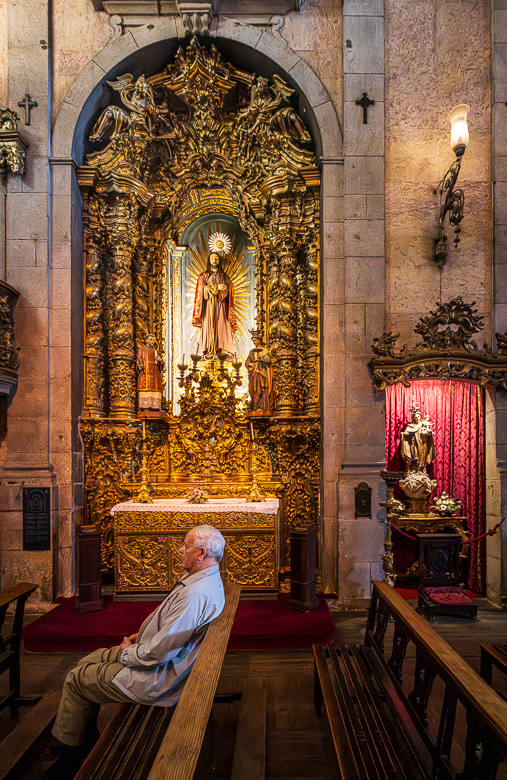
Carmo church to the right is later and built in the 18th C. It is fronted by one of the finest examples of Portuguese Rococo or late Baroque and was built between 1756 and 1768. Both the exterior and interior are adorned with gilded woodcarvings and rich decorations.
In between the two churches is a separate house that must be the world’s narrowest house, only one metre wide. The house was according to the legend built to prevent all contacts between the nuns and the monks. My first image shows clearly the narrow house between the two churches.
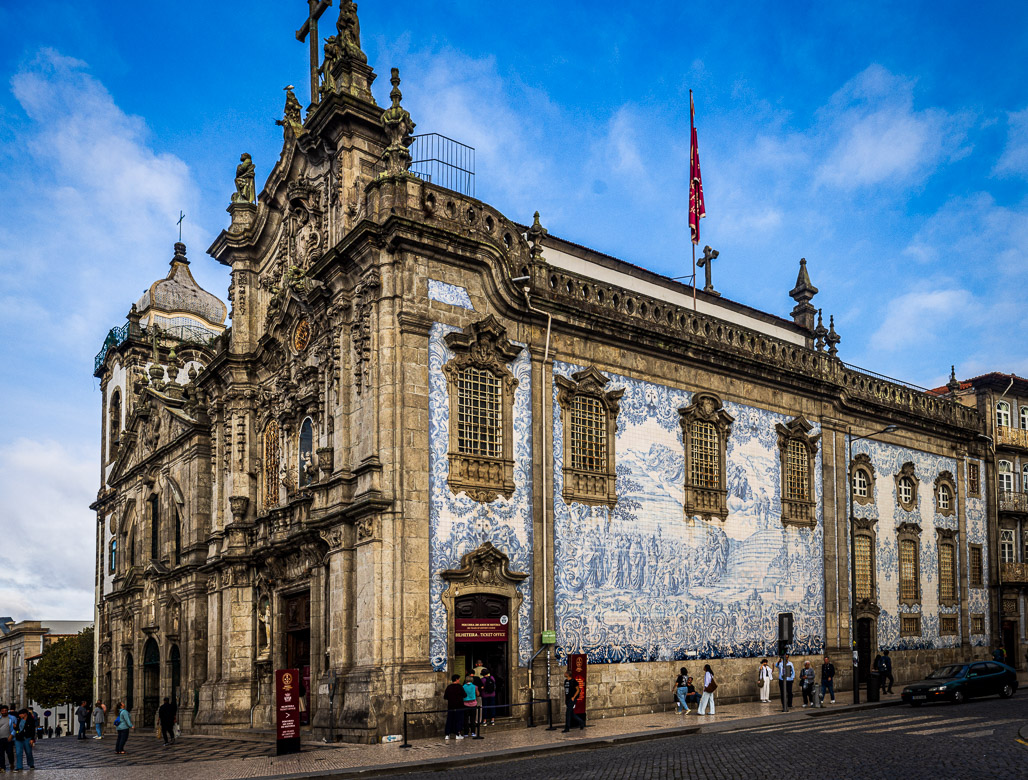
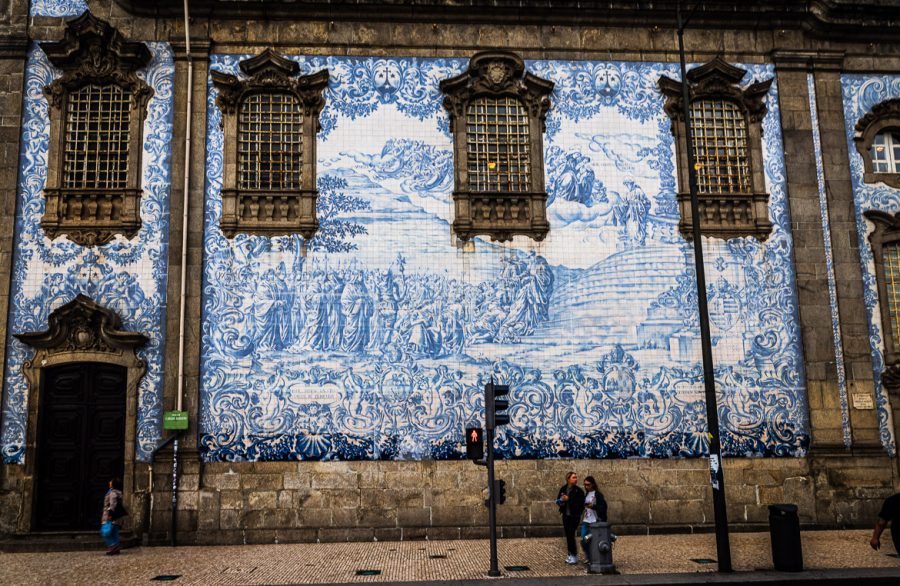
On the Igreja do Carmo is a mosaic added to the side of the church in 1912. It is made of the very classical Portuguese white and blue azulejo tiles. The artwork demonstrates the scene of the founding of the Carmelite order.
Azulejos are Iberian tin-glazed ceramic tilework featuring blue and white designs. They are normally placed on the exterior of buildings and serves both as insulation and as decoration. The term is Moorish and derives from Arabic meaning “polished stone”. Originally influenced by the geometric Islamic designs, they have over time developed and incorporated both European and Chinese porcelain styles. The 19th century saw azulejos being put on facades of buildings for the first time, and in the 20th C they were more and more used as urban art. See my coming post about the train station in Porto.
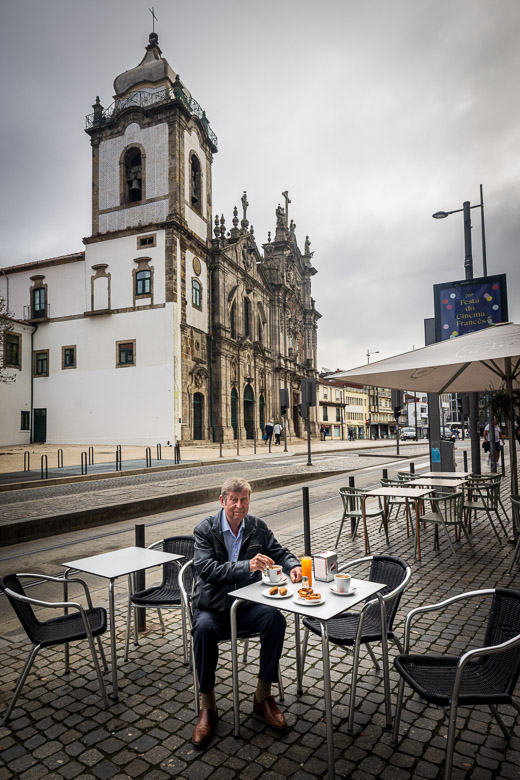
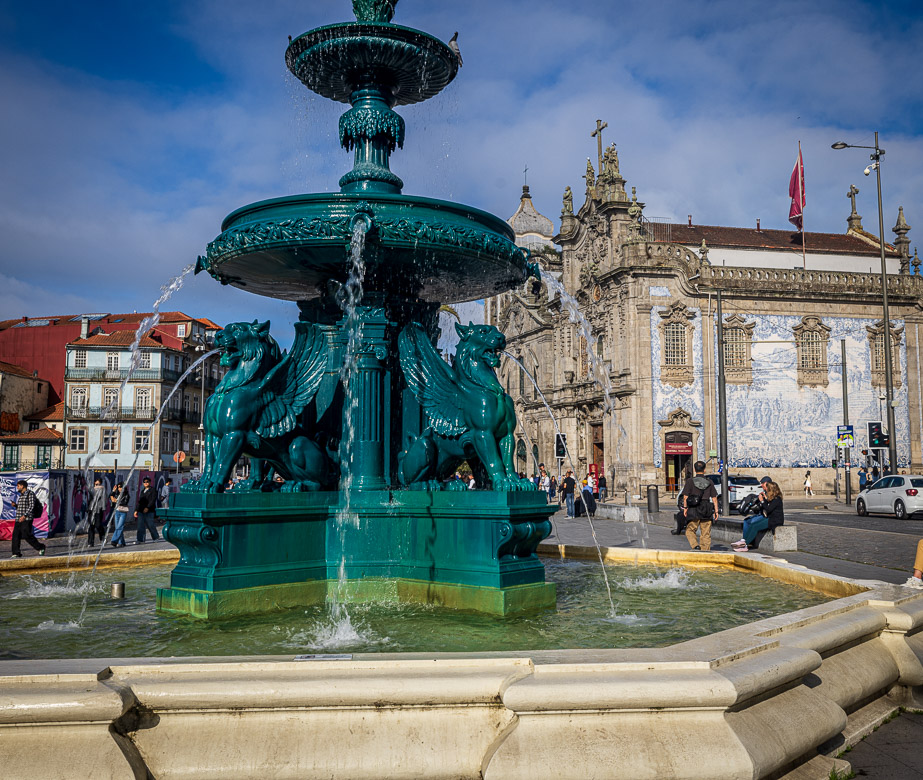
The Carmo and Carmelita churches are located in a beautiful square in Porto, Praça de Gomes Teixeira. Gomes Teixeira was the first rector of the university of Porto. The square is famous for its marble fountain guarded by four lions with wings. The fountain was intended to supply water to this district of Porto.
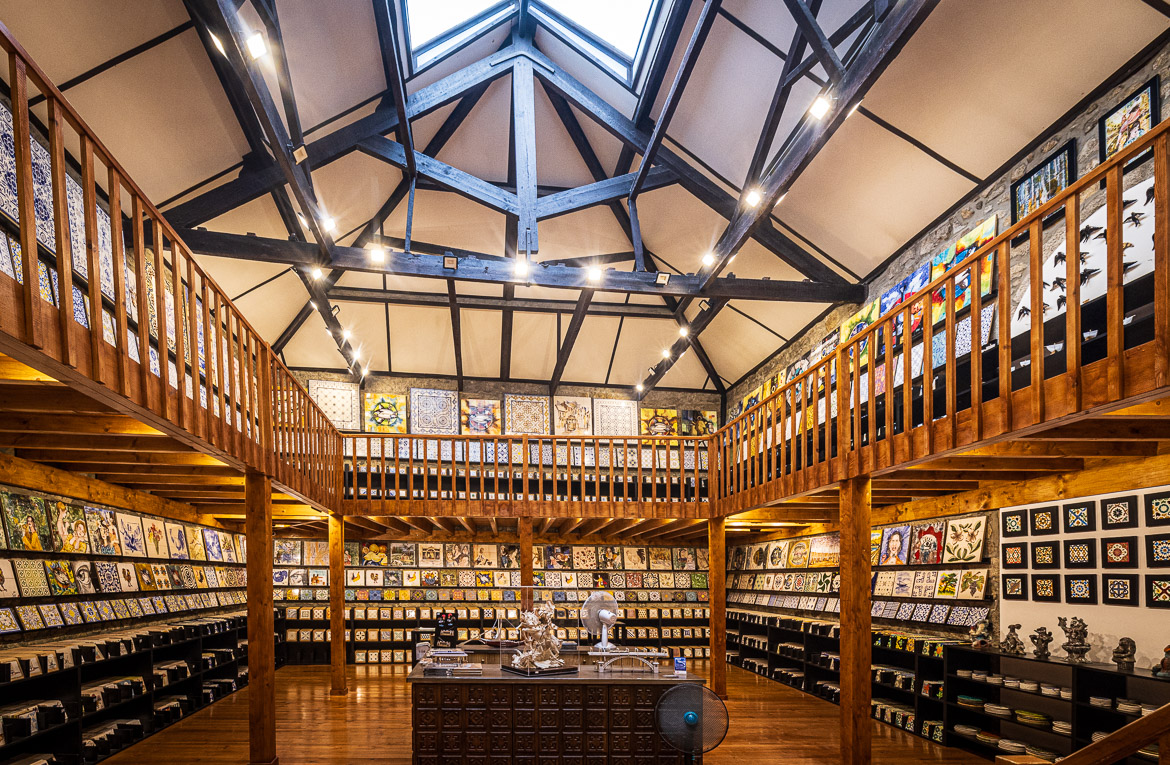
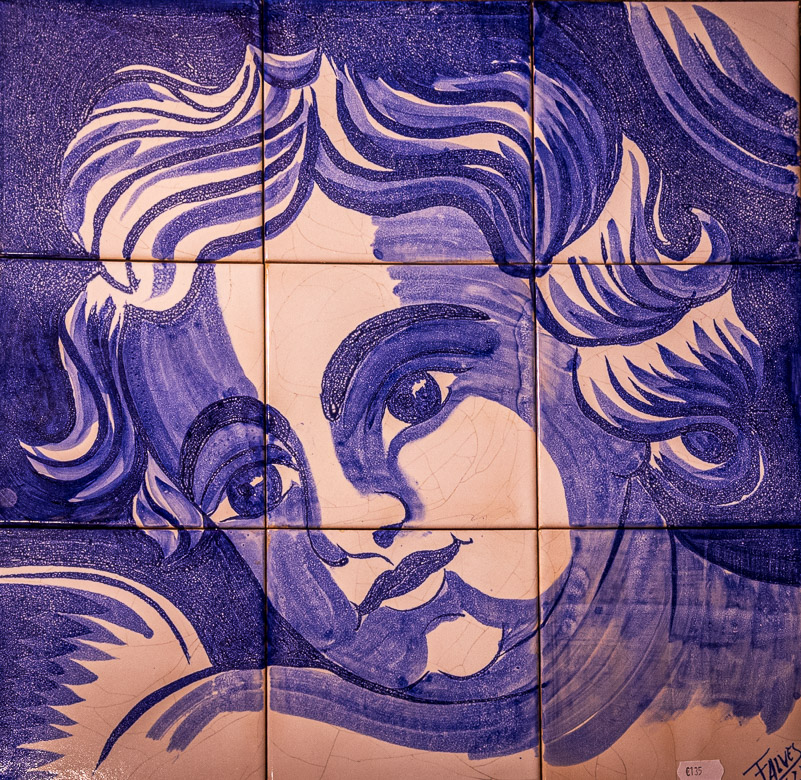
Not far from the square is a shop that only displays and sells azulejos, both the classical white and blue and more colourful designs. It is such an important part of Portuguese architectural culture and history that we walked in and studied the decorative tiles.