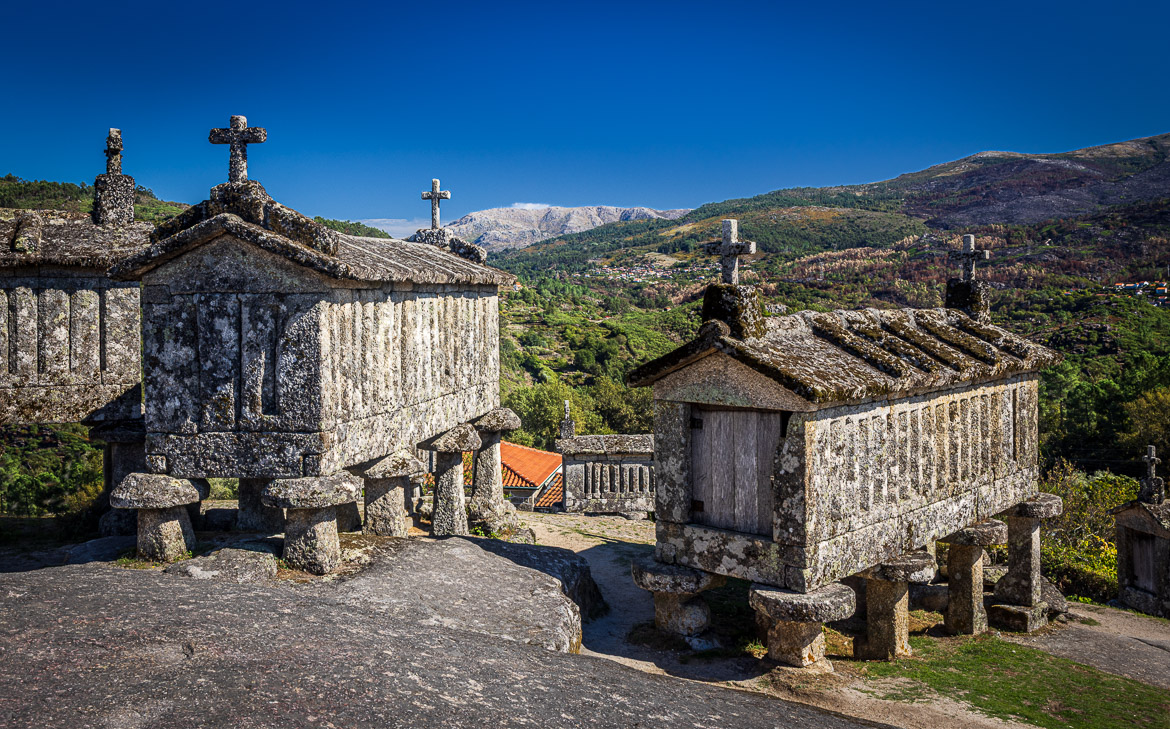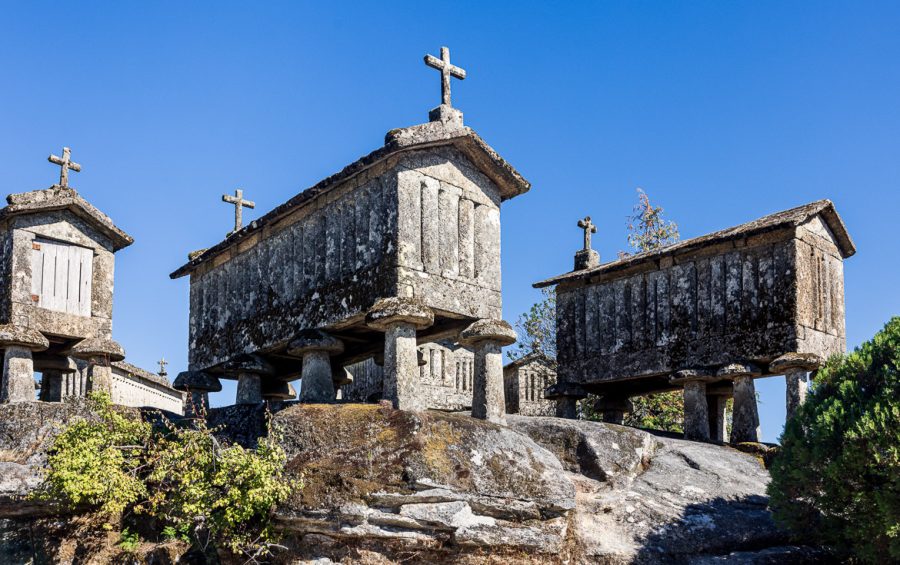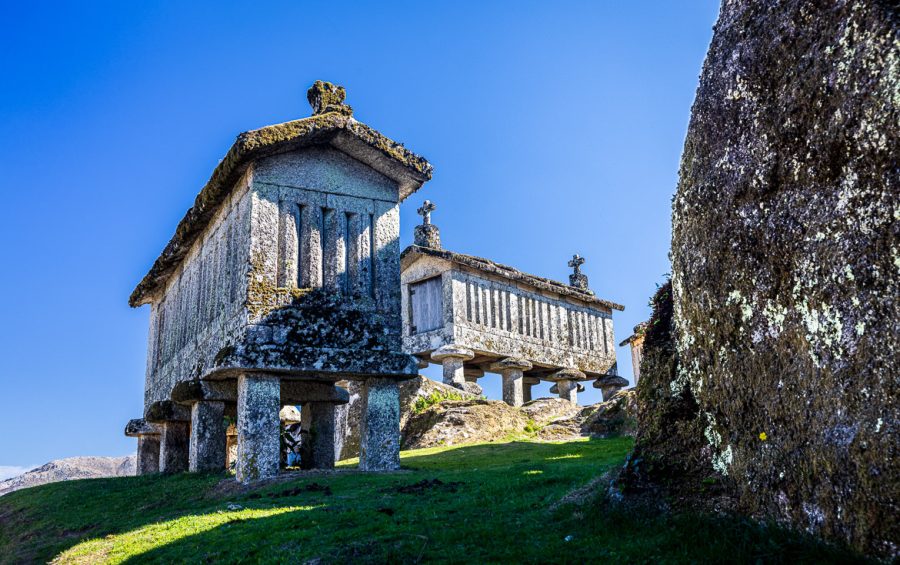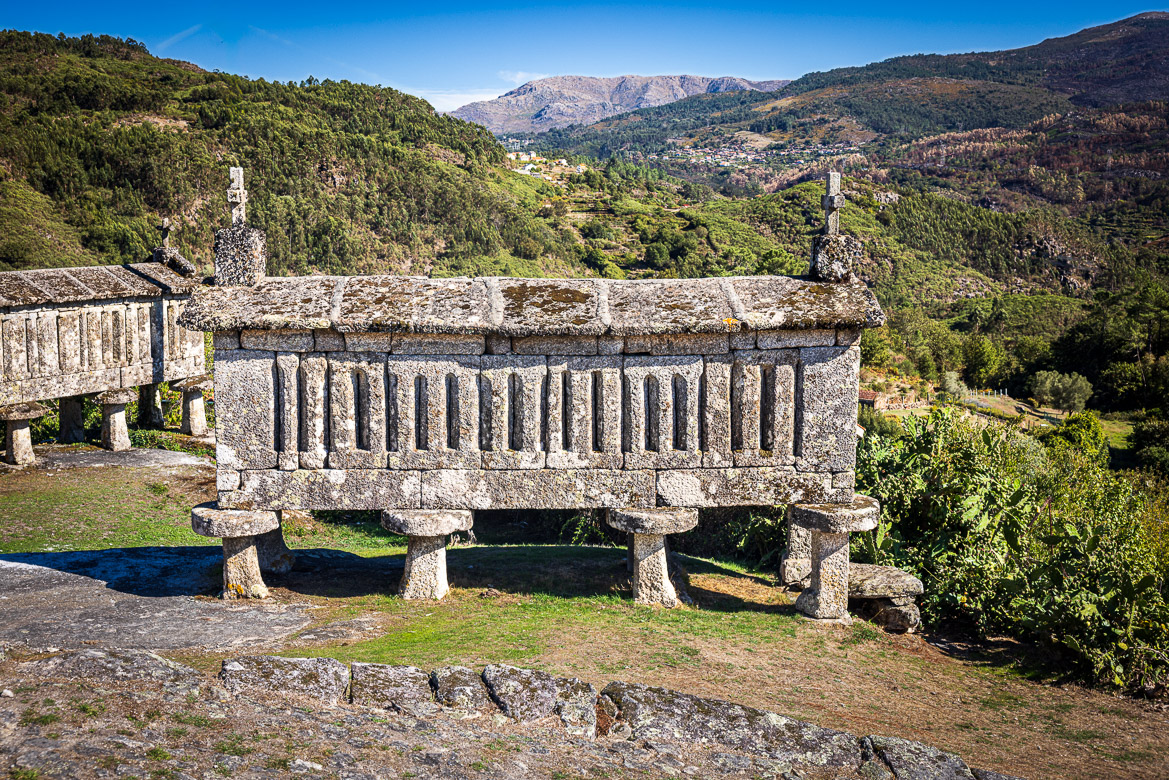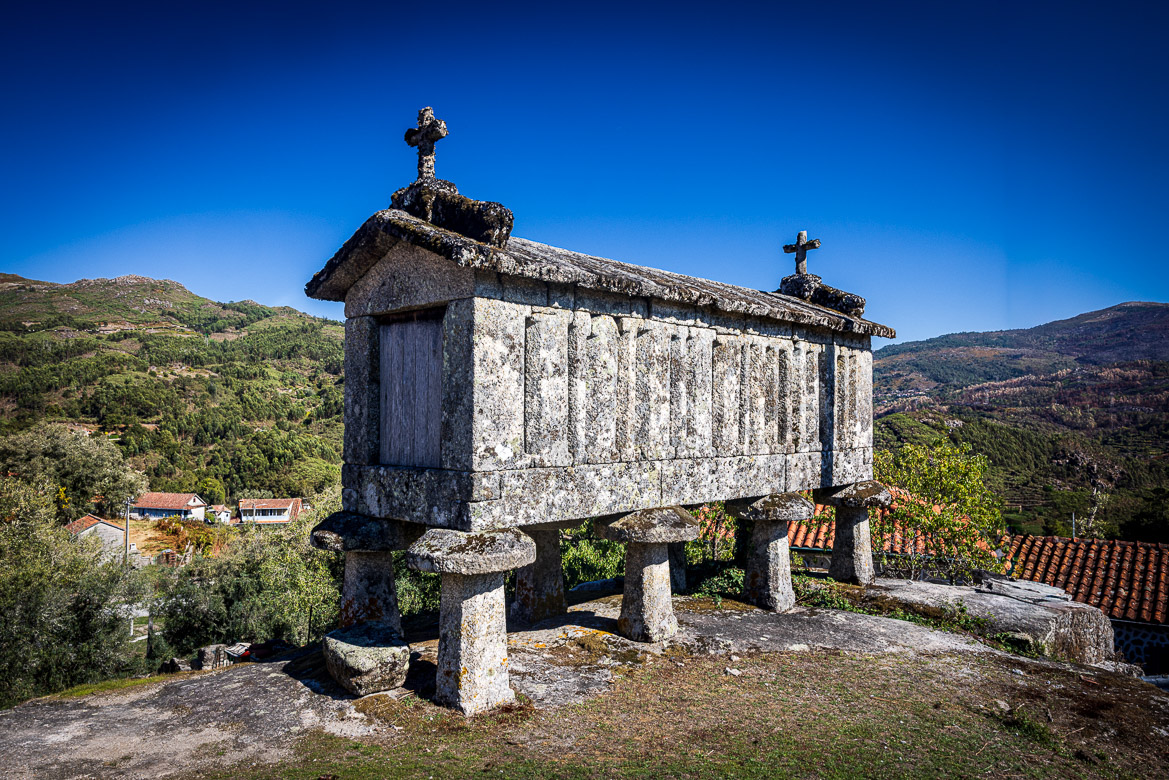
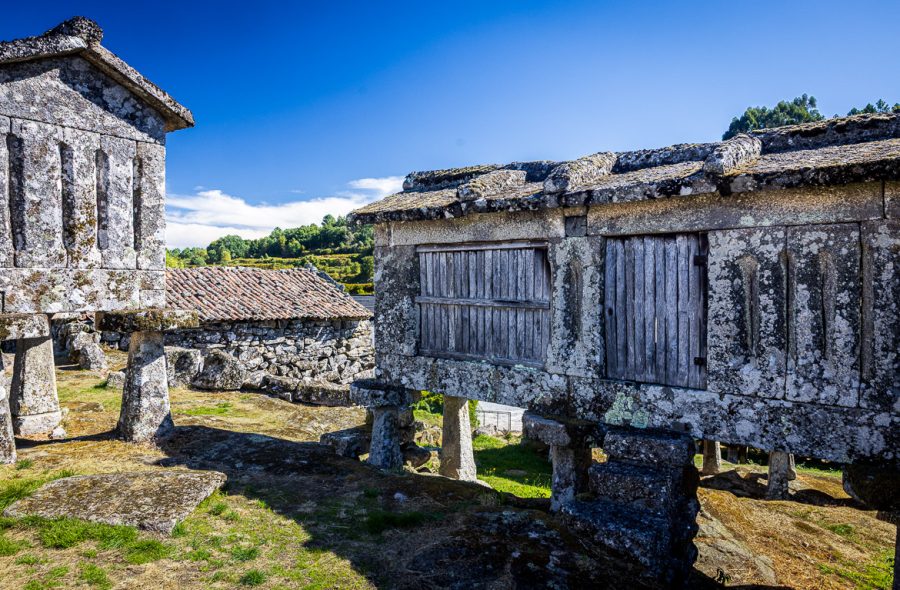
After a short excursion across the border to Spain, we have in the last post from northern Portugal returned to Portugal and Parque Nacional da Peneda-Gerês. In this part of Portugal (and Spain) the grain was stored in specially built stores, granaries, made from granite. They look very much like a large tomb, which is further emphasised by the crosses that often adorn the roof of the granaries. To get ventilation that kept the grain dry, there are slots along the sides of the granaries, and along the short sides there are openings to bring the grain in and out. The Espigueiros don’t stand directly on the ground but on stone columns and special stones are made to prevent any rats or other ground based animals from getting into the stores. The ”legs” carrying the granaries looks like a set of mushrooms
An abundance of these Espigueiros can be found in the villages of Lindoso and Soajo, both within the National Park. We visited both of them and came first to Lindoso. But the very first granite granary stores we actually saw in Spain, at the village of Lobios (see my previous post).
Lindoso is a village on the border between Spain and Portugal overlooking the border and the course of the Lima River. Due to its strategic importance a substantial castle was erected there in the 13th century. From the castle walls you get a panoramic view of the surrounding mountains, the river valley and Spanish land across the border.
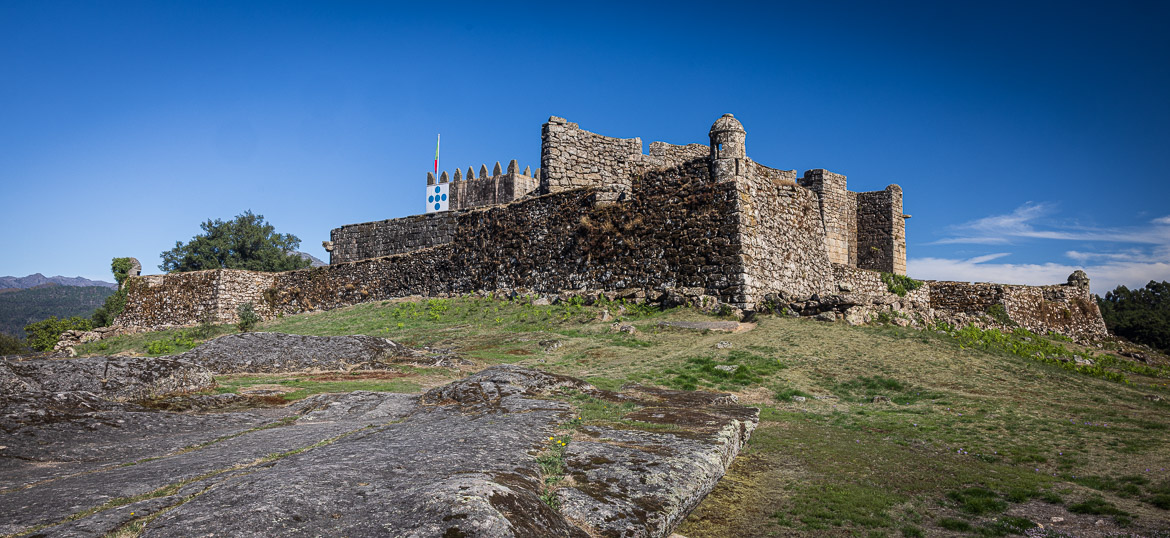
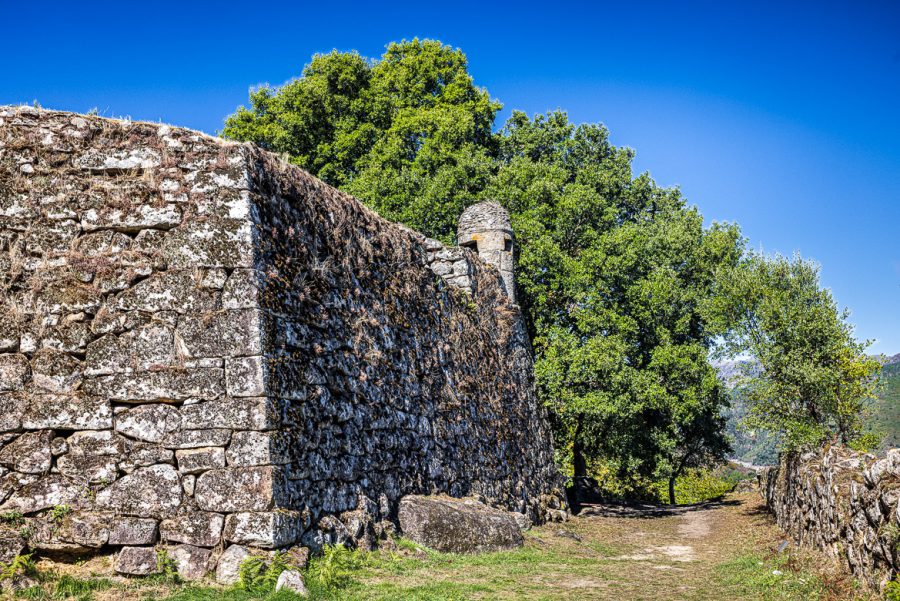
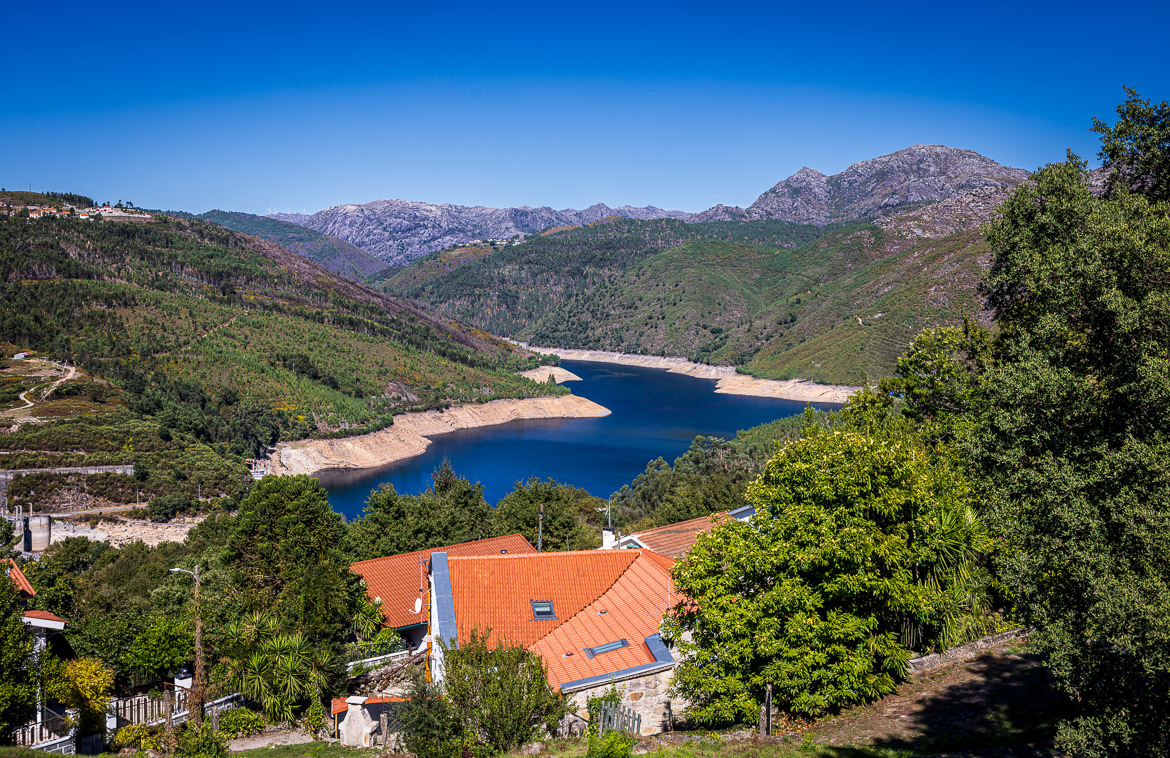
On the same hill but a little bit below the castle are an abundance of Espigueiros, granaries, not less than 67 of them. They date mainly from the 18th and 19th C.
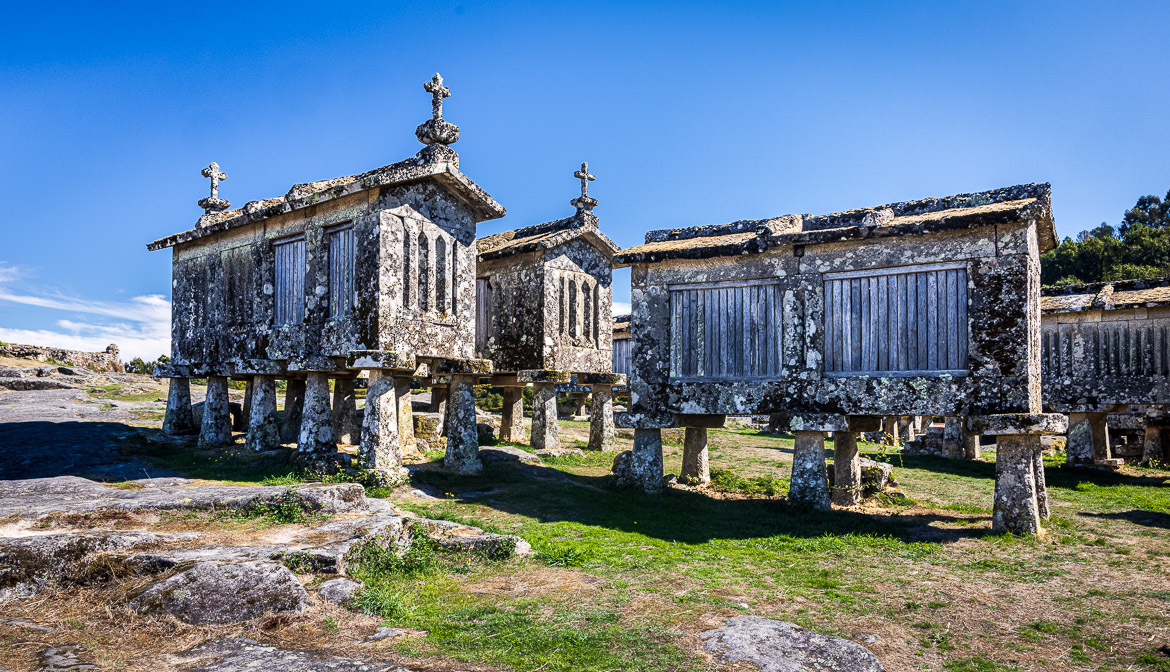
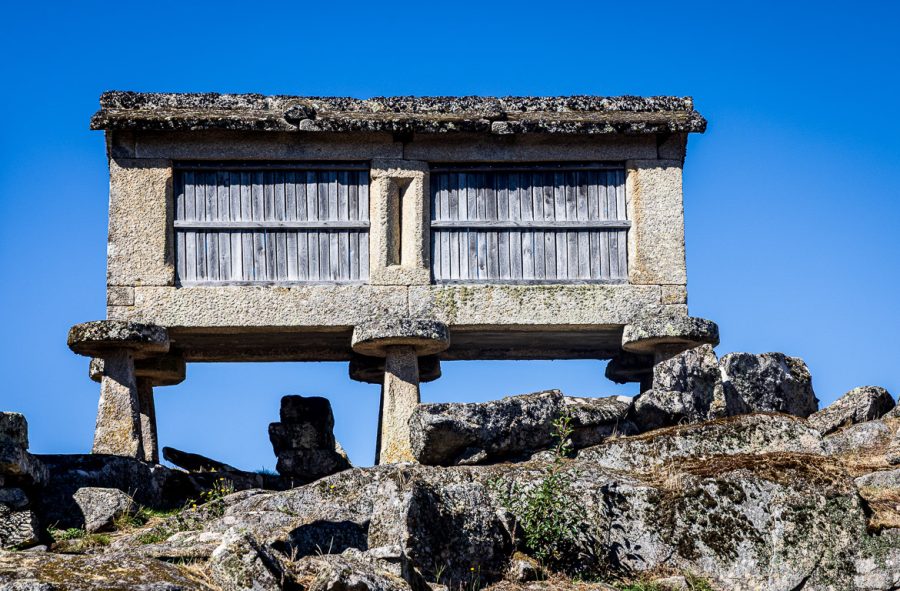
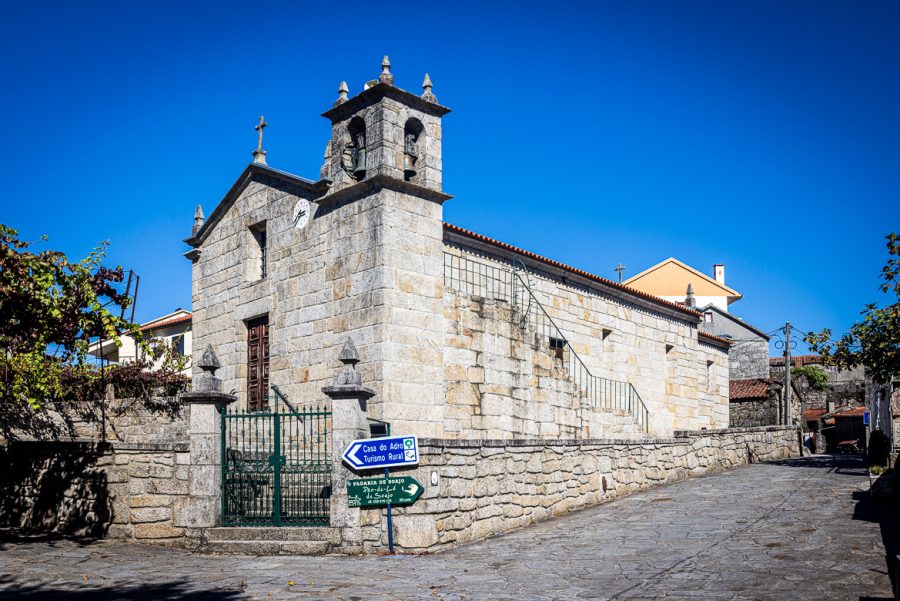
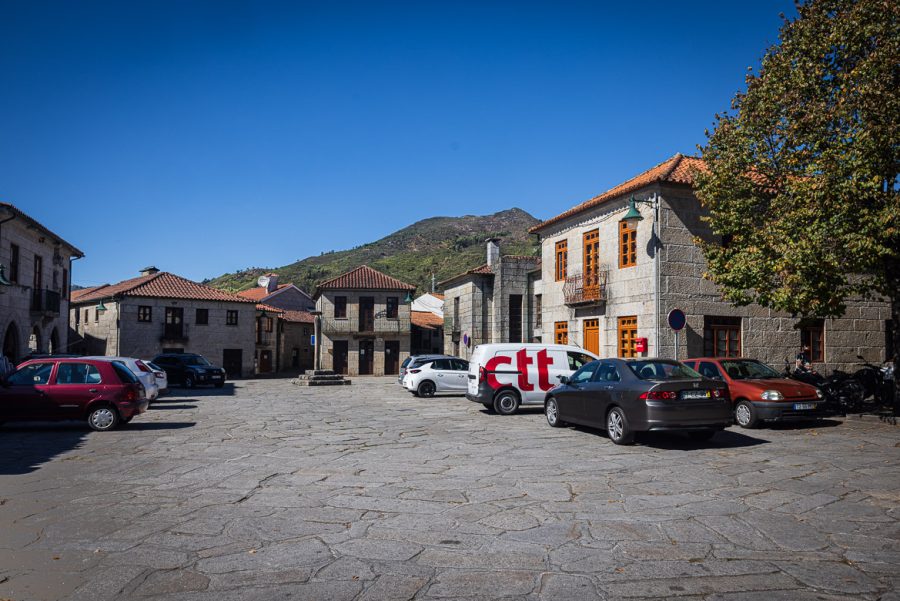
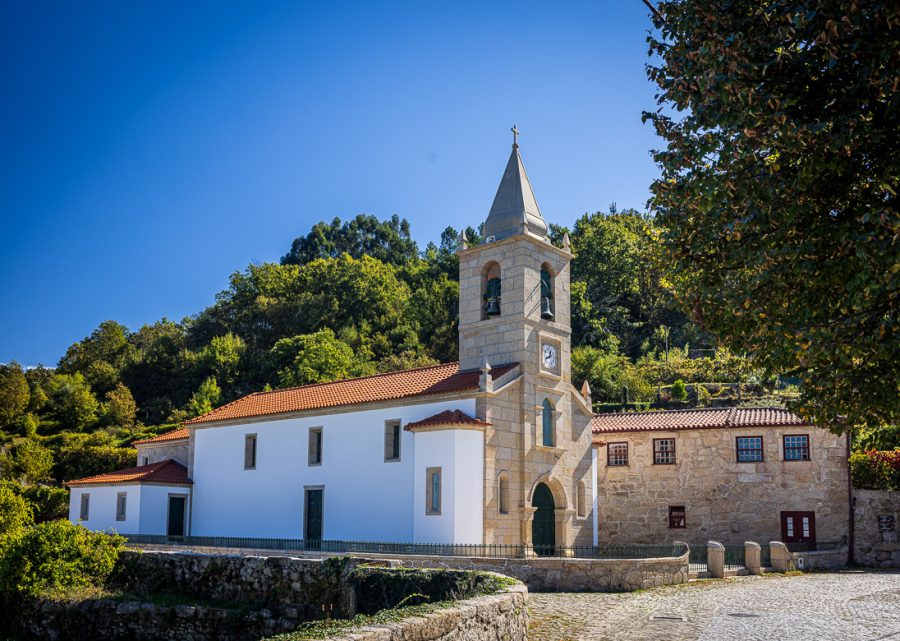
From Lindoso we crossed the river Lima and continued to the other town famous for its Espigueiros, Soajo. Below are images of the church and the very deserted town square and then a few images of the granaries.