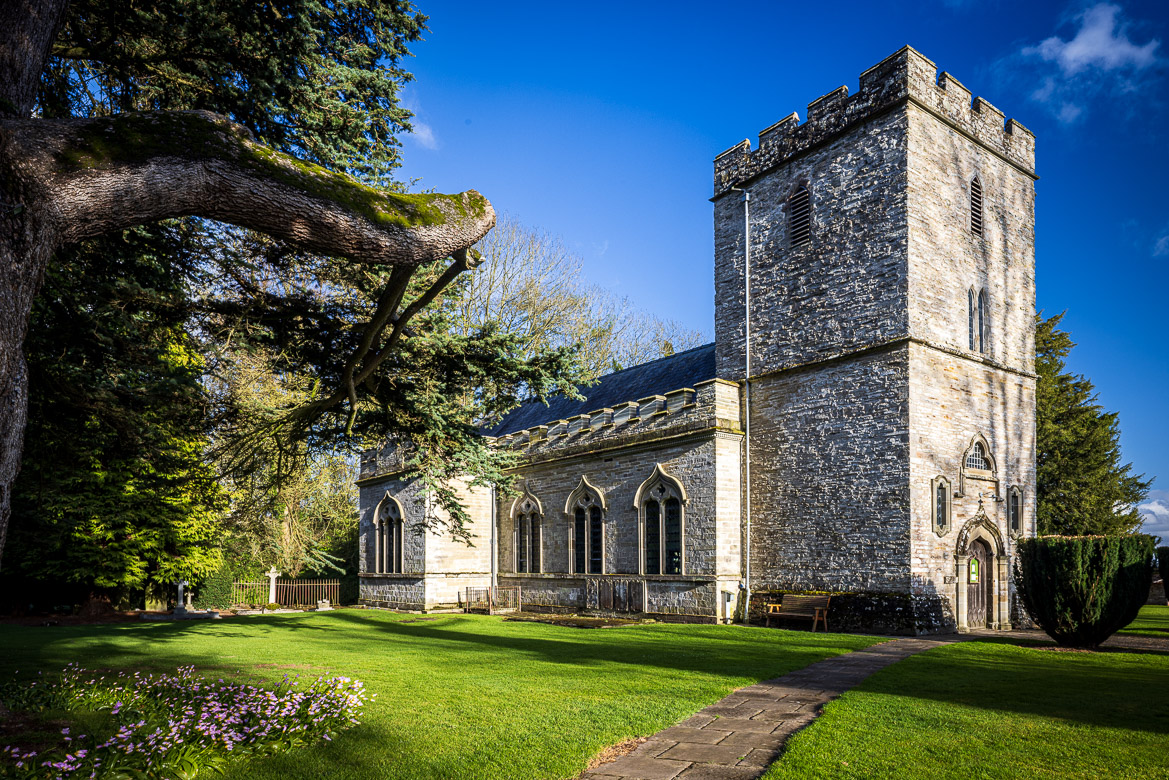
Just north of Eardisland, where we live, is Shobdon, only ten minutes by car. Shobdon was one of the properties of the de Mortimer family, who came to England with William the Conqueror in 1066. I have told about the Mortimer family in my recent post about Mortimer Forest. Their primary seat and castle was in Wigmore, a little bit further north. Wigmore Castle was the object of another of my posts a year ago.
Hugh I de Mortimer gave Shobdon to his steward, Oliver de Merlimond. The Mortimer family was very powerful in medieval England and, as I have told in a previous post, one of the Mortimers led the rebellion that deposed of Edward II. The steward, the man that ran their estates, was very important too, and obviously important enough to get the gift of all of Shobdon.
Around the year 1125, Oliver went on a pilgrimage to Santiago de Compostela and on the journey back passed Paris. He was naturally inspired by the great church buildings he saw and on his return to Shobdon he completed a new church that was consecrated by the Bishop of Hereford in 1131.
It was a small but very beautiful church. It seems to have been the first building decorated by the celebrated Herefordshire School of Sculptors. The most famous example of the works of the Herefordshire School is the Church of St Mary & St David in Kilpeck (south of Hereford), which I have told about and photographed in an earlier post about Kilpeck Church.
The work of the Herefordshire school is so unique and so ornate that it has been many speculations that Oliver brought back a carver from Spain or France, or that one of the pilgrims accompanying him was a stone mason that later worked on the church in Shobdon and influenced the Herefordshire School.
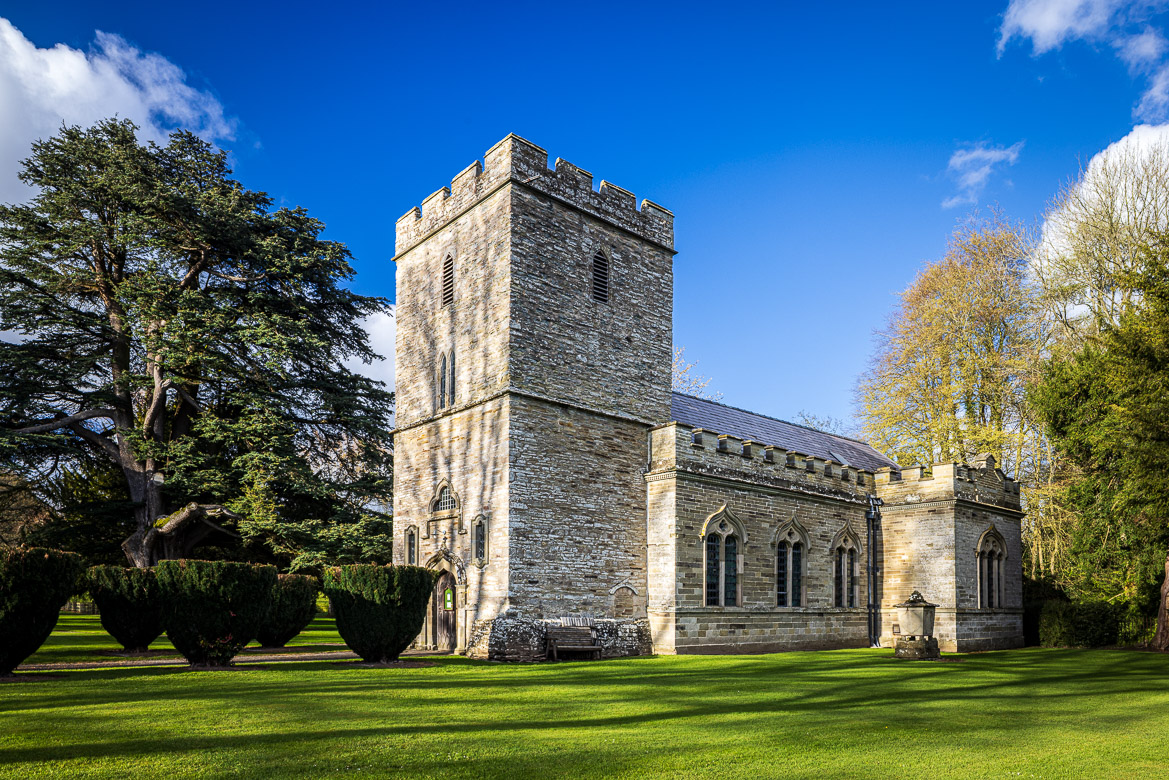
But in the middle of the 18th C, such work was out of fashion and Viscount Bateman, who lived at Shobdon Court, decided to tear down the original church and build a new one. Together with his uncle, Richard Bateman, they demolished all but the west tower of the original 12th C Romanesque church.
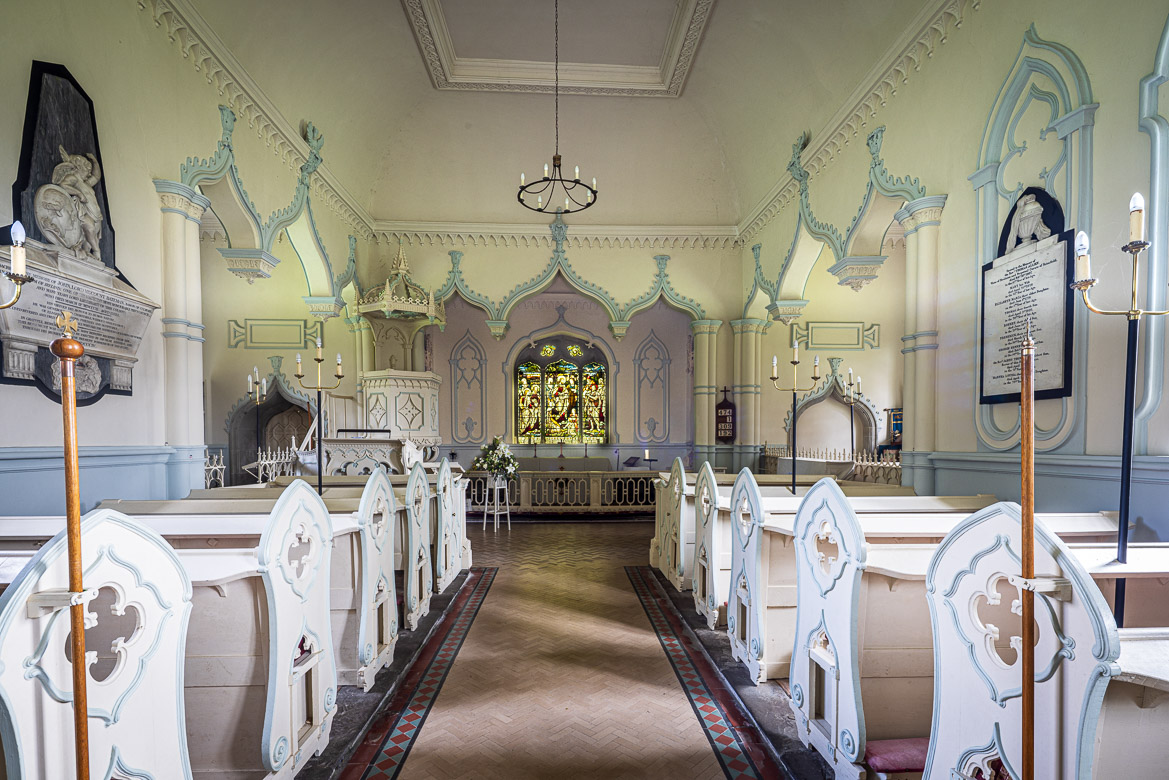
They built a new Rococo Gothic structure, as far away in style from the original church as possible. Richard Bateman was heavily influenced by an aesthetic movement, Horace Walpole’s Committee of Taste. The present church is a listed Grade I structure, an architectural jewel and the best example of a Rococo church in England.
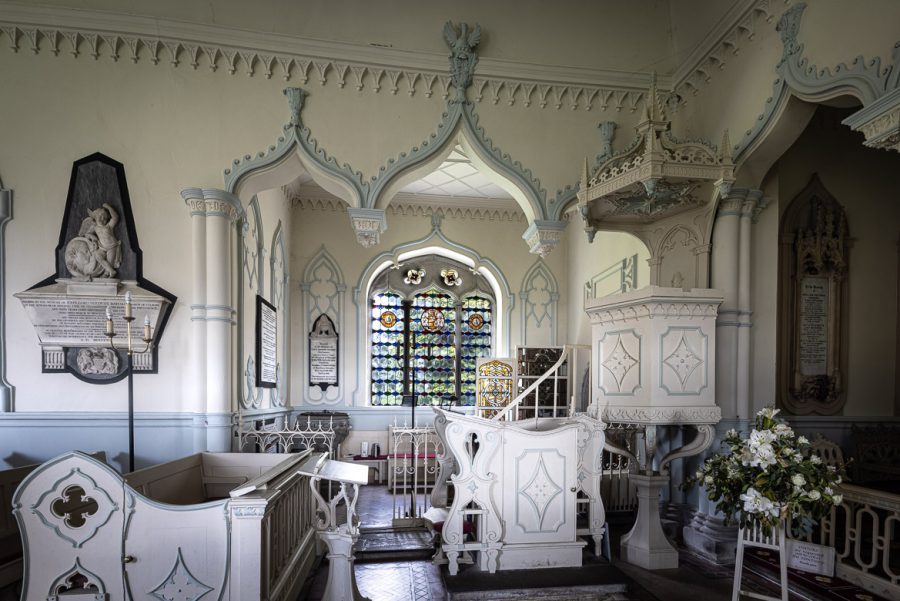
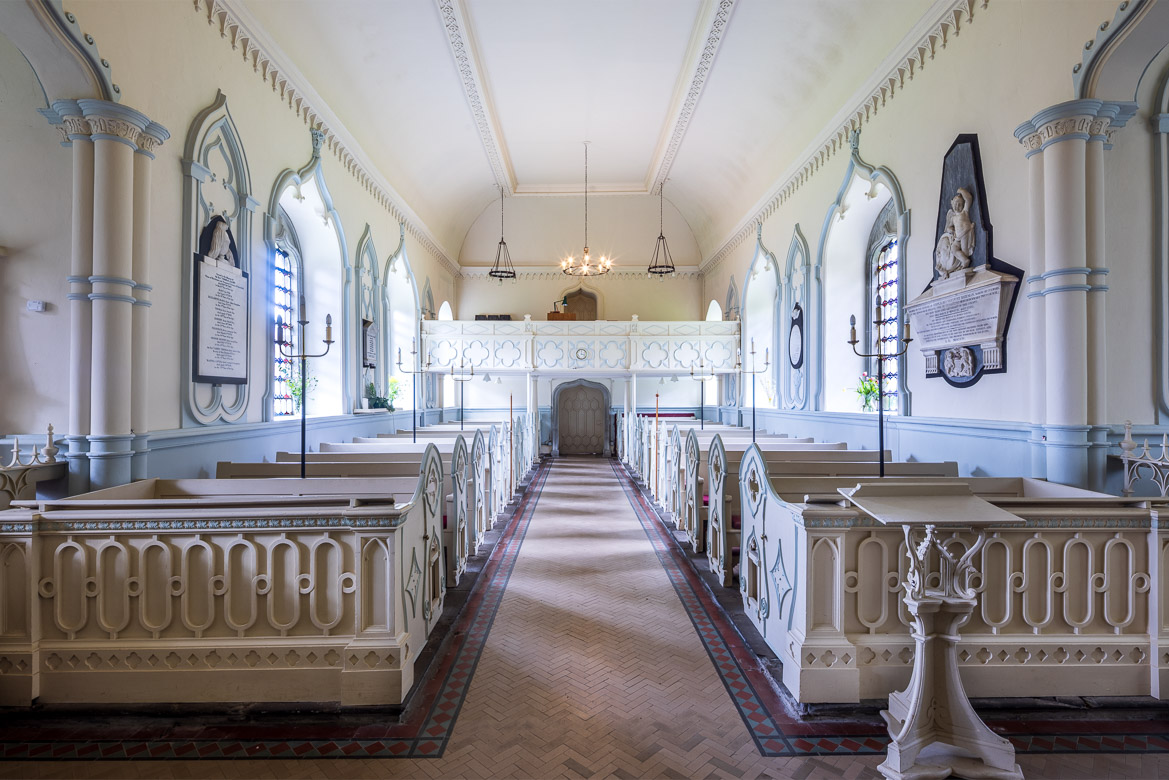
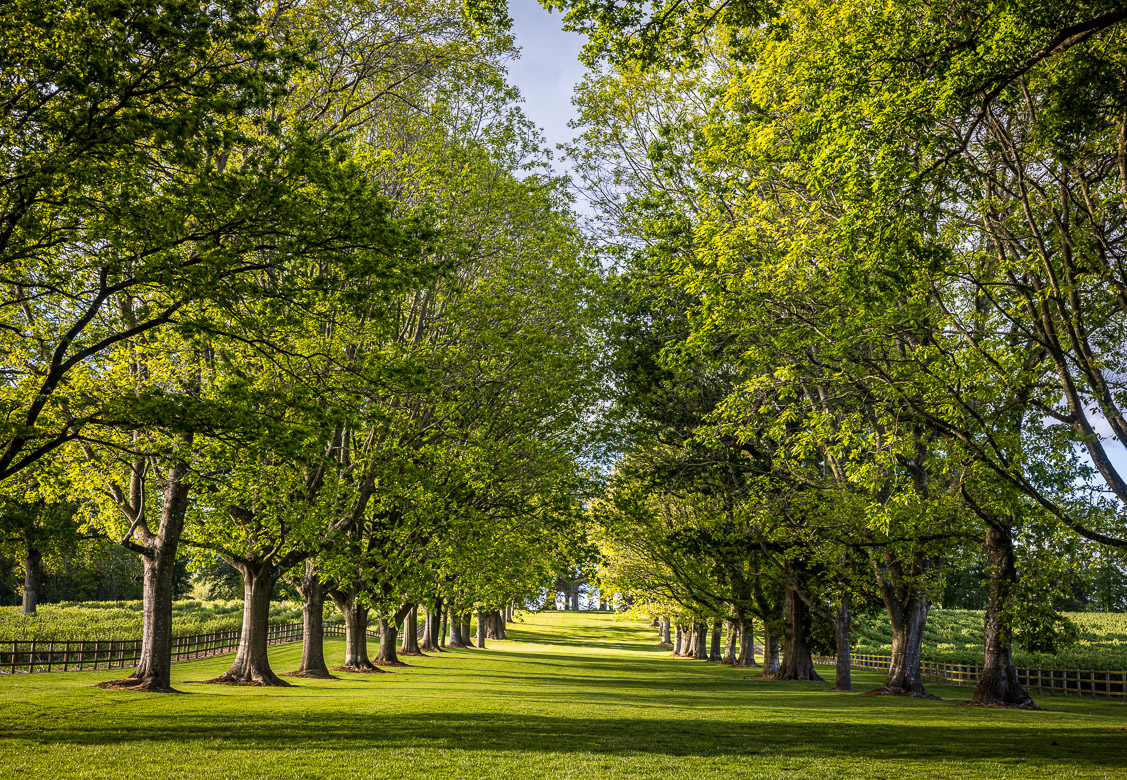
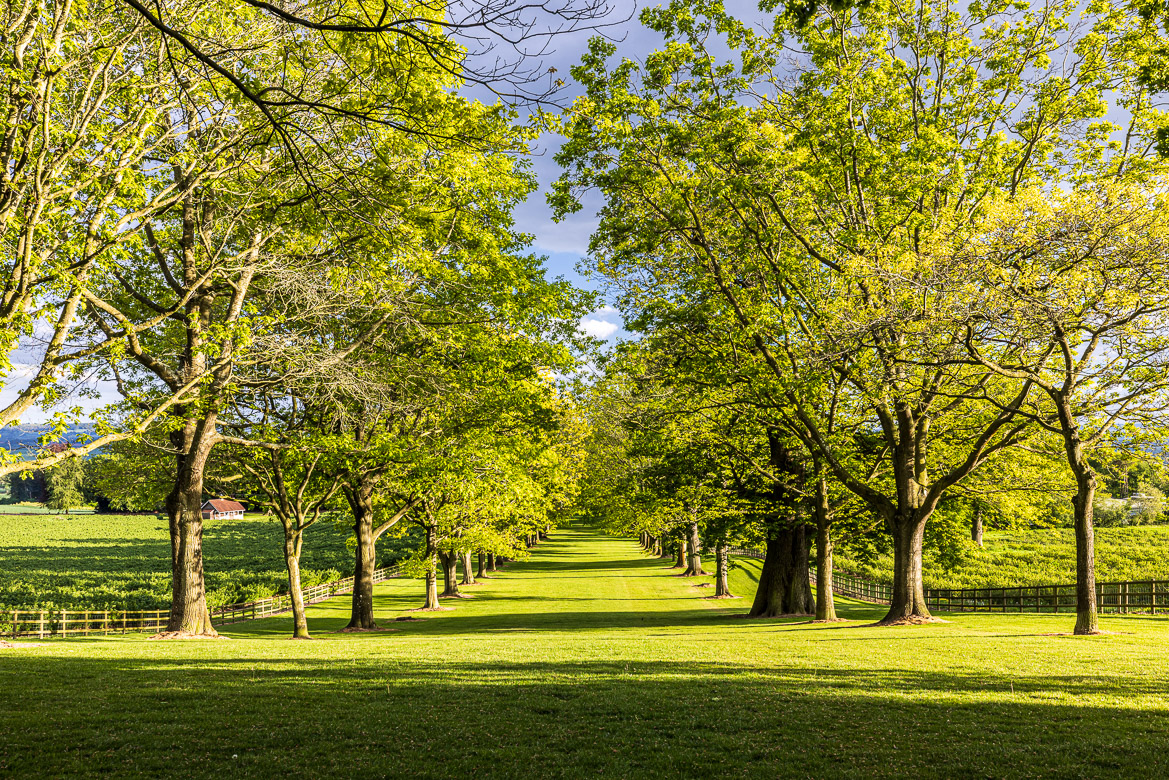
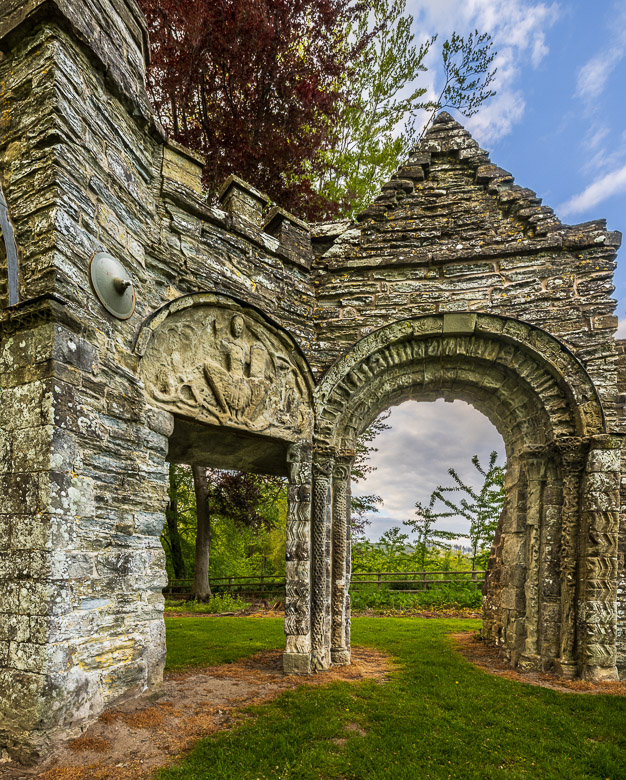
But Richard Bateman was wise enough to preserve parts of the original church. He took out a central arch and two doorways and moved the total structure to a hill, a few hundred metres north of the church location. There, he erected the archways as a folly or eyecatcher. You can now walk up the hill along an alley of oak trees to admire the arches. Unfortunately, the Arches haven’t weathered that well standing outside in rain and wind.
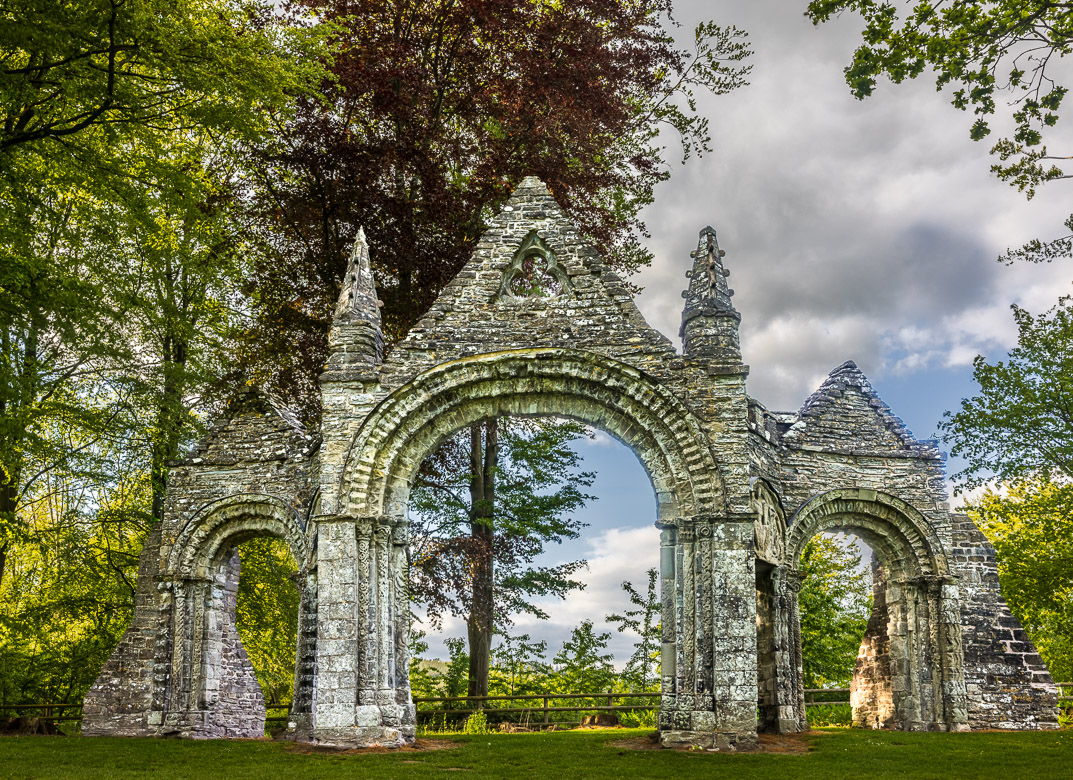
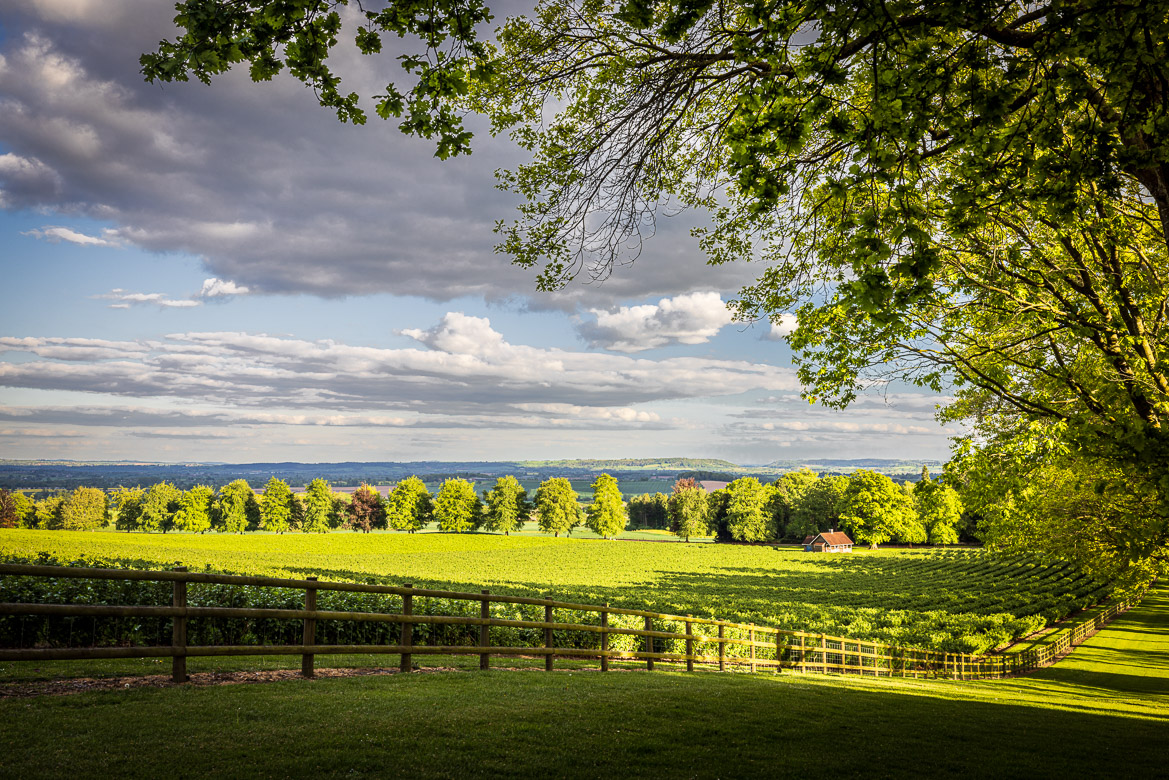
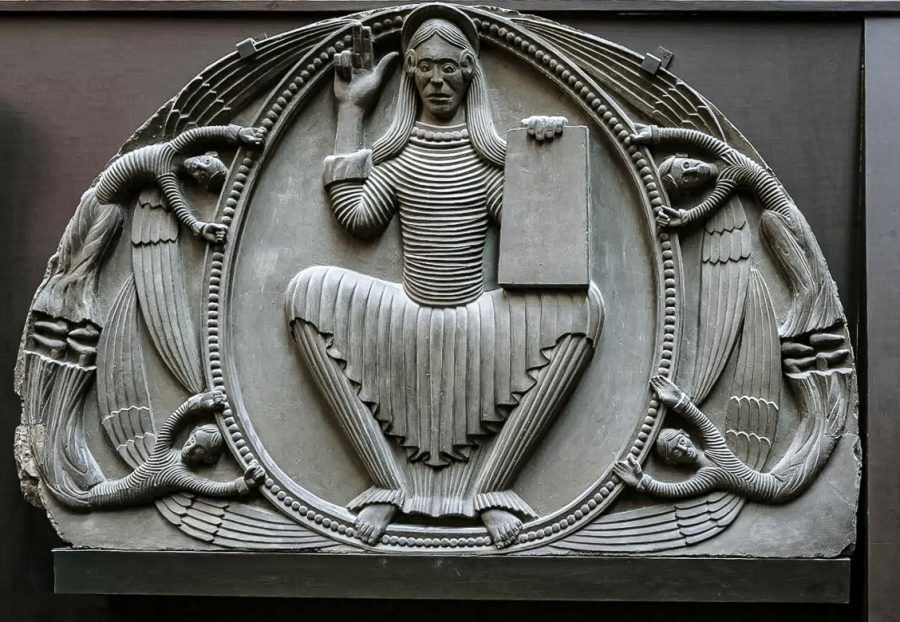
In the 19th C the interest for Romanesque architecture was back and the arches became famous and a tourist attraction. In the Great Exhibition at the Crystal Palace in Hyde Park in 1851, visitors could see a model of what the original arches and doorways would have looked like. The tympana (a tympanum is the arch above a doorway) were decorated with figures and one archway is of Christ in Majesty. The original arch sitting outside at the top of a hill, has weathered badly, but a cast was made at the Great Exhibition (now on display at Victoria & Albert) showing what it would have looked like. See my photos for illustration.
At Shobdon we are given a unique possibility to compare two very different architectural schools from two very different periods, both made by high quality masons and craftsmen. Personally, I was a little shocked, when I entered the present Shobdon church the first time. It is a little like a wedding cake, but certainly a very distinct architectural style. And what a privilege to be able to see and compare the styles and admire the craftmanship.