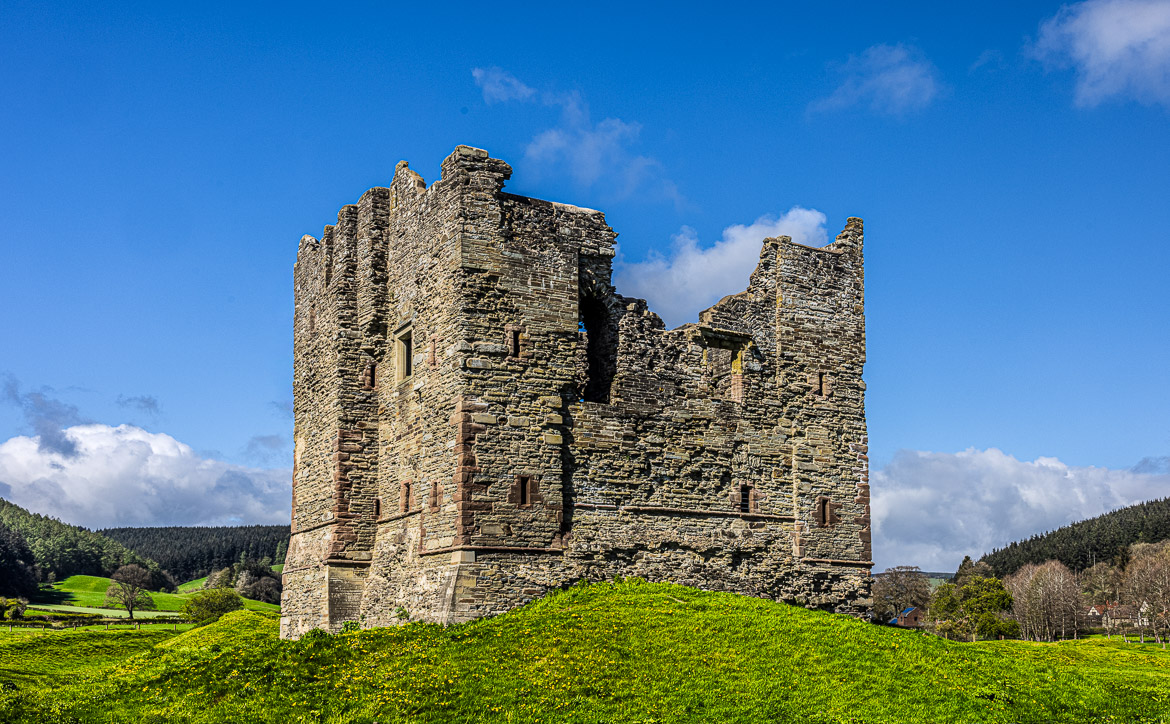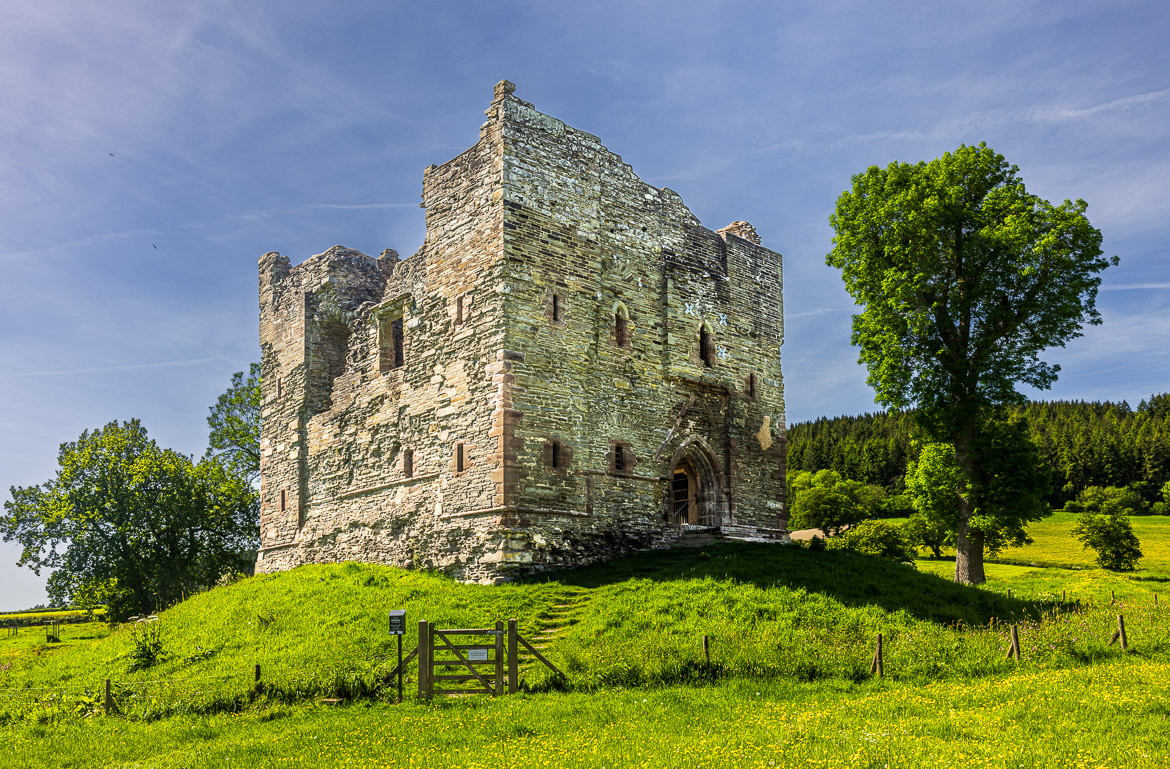
Hopton Castle is situated in Shropshire, not far from Leintwardine. We visited the first time after having paid a visit to the local butcher at Leintwardine, which is 25 minutes north of our home in Eardisland. It looks and it may have been built as a motte-and-bailey castle dating from late 11th or 12th century. But it may also – and more probably – have been built as a new castle by Walter de Hopton in late 13th C, deliberately copying elements of earlier castles in both style and architecture, pretending to go back to an archaic, chivalric style. It is a tower house resembling the keep from an earlier era.
At that time, it gave Walter de Hopton a status by referring to a heroic past. And it could have been built on the remains of a genuine Norman motte-and-bailey castle, as remains of ditches surrounding the castle can be seen. And it wasn’t only one, but three Walter de Hopton that lived in the castle at different periods. Father, son and grandson. And we cannot exactly say from documents who was responsible for the erection of the present building.
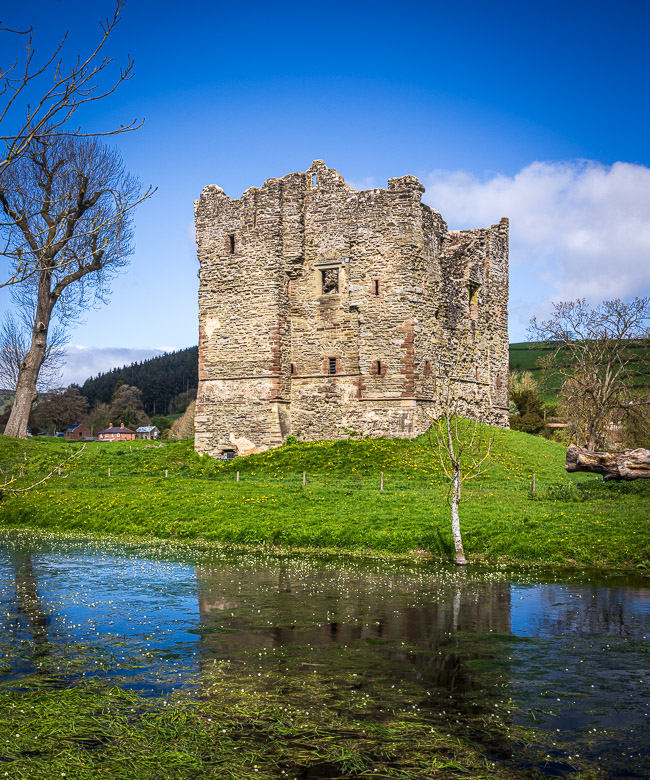
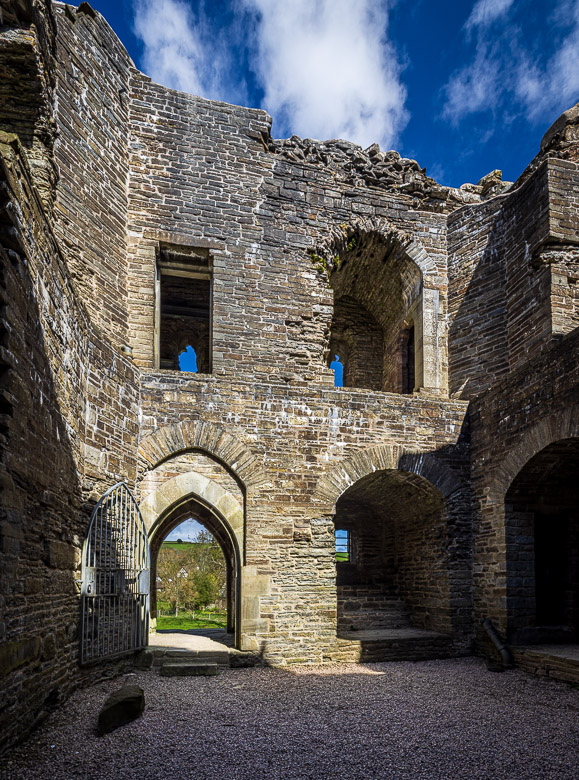
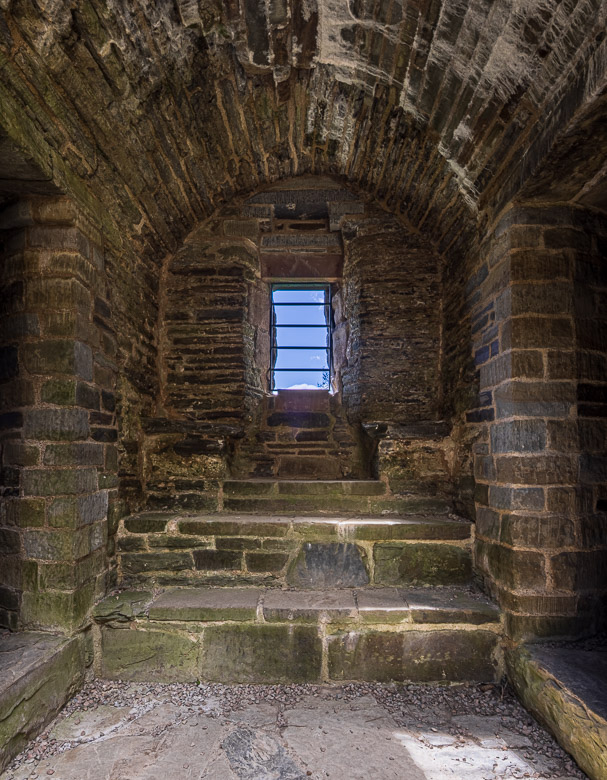
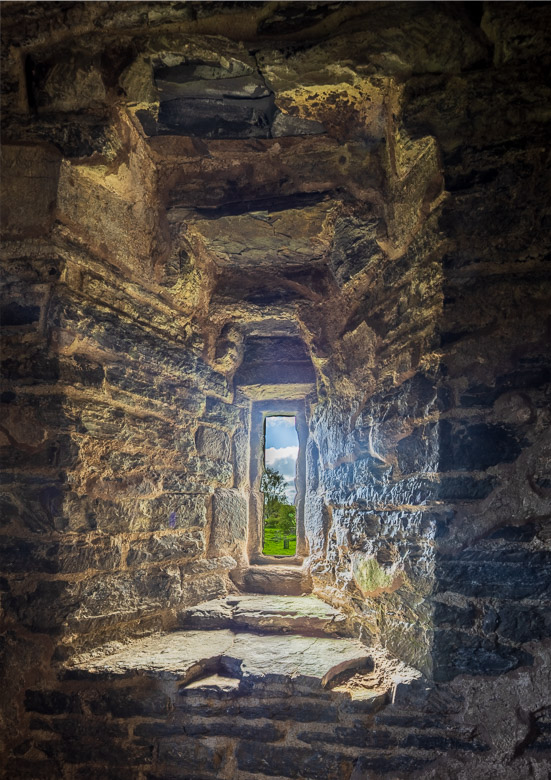
Several factors indicate that it was never a castle in sense of a defensive building, but rather a “contemporary manor” or a hunting lodge. The raised entrance doesn’t have either a defensive ditch nor a drawbridge to protect it. And the windows have seats built into the sides that must have been pleasant to sit in admiring the surrounding landscape, but they weakened the defences of Hopton Castle. This was rather a romantic period home than a fortified castle.
As Hopton Castle is situated in the Welsh Marches, it probably would have seen some fighting during certain periods, but nothing is documented about this during medieval times. However, during the Civil War it was held by the Parliamentarians led by Samuel More. 31 men held out for five weeks against an army of Royalist soldiers. In the end they had to give up but all of the survivors (28 men) except Samuel More were then subsequently murdered by the Royalists and buried in a pit nearby.
What we see today are the remains of the castle after this siege and after some late restorations by the Hopton Castle Preservation Trust during the last decades.