Christmas and New Year 2023 our family was invited to Oman by our friends Arne and Rada. As the Osterlund family was between houses, having just sold Knightstone Manor and not yet acquired Lynch Court, I wasn’t able to work on my photos. And when we moved to Lynch Court and I set up my computer and monitors again, I had so many new photos to present that I was never able to squeeze in the photos from Oman.
But now is the time, and I will in a series of posts present some of our adventures in Oman. We stayed most of the time with Arne and Rada at their house an hour away from Muscat, the capital of Oman. But we ventured out together both to the mountains south and west of Muscat and to the desert further south in Oman.
In recent months Oman has of course come on most people’s mind, as the Strait of Hormuz has been closed for shipping, choking the trade in oil, gas and many other types of goods to and from Iran and several Arab states. The Strait of Hormuz has Iran on the northern side and Oman on the south side together with UAE (United Arab Emirates).
We could from Arne’s and Rada’s house follow the steady stream of shipping along the strait, not realising that it would come to a total standstill a couple of years later. Let us hope that the fragile peace that was established in June will last and trade will resume as before.
Oman was only unified into one country recently after the Jebel Akhdar war in 1954 to 1959. Traditionally it is two very different cultures, with the coast based on seafaring traditions and trade and with Muscat as its centre (and before that other coastal towns). Inland, up in the mountains, religious leaders ruled the rugged interior from Nizwa, another town. And the unifying of the two regions and cultures took place in the later part of the last century.
Oman was very poor until some oil was found in the 1960s and with the ascension of Sultan Quaboos in 1970 a period of rapid transformation started. Until his reign (which lasted 50 years) the whole of Oman had only 3 schools, 2 paved roads and one hospital.
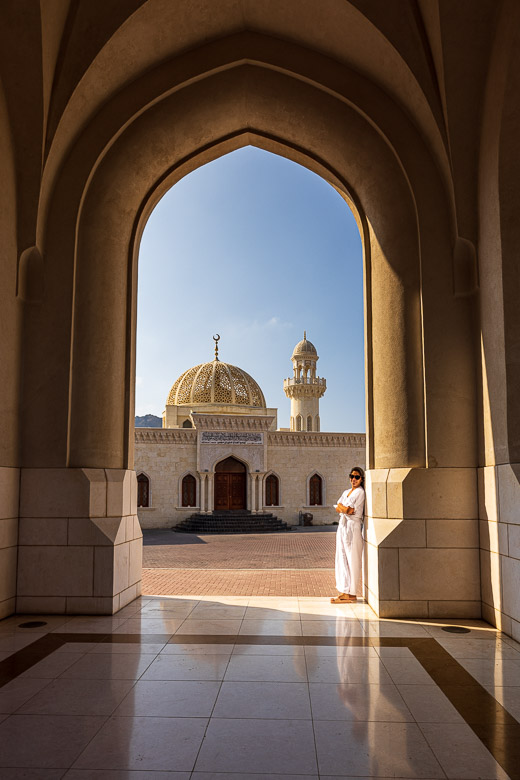
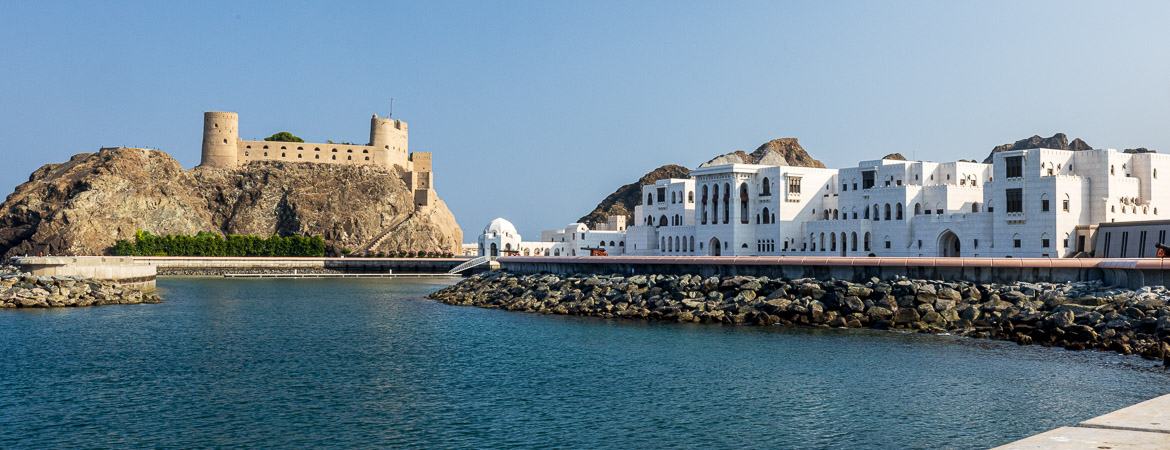
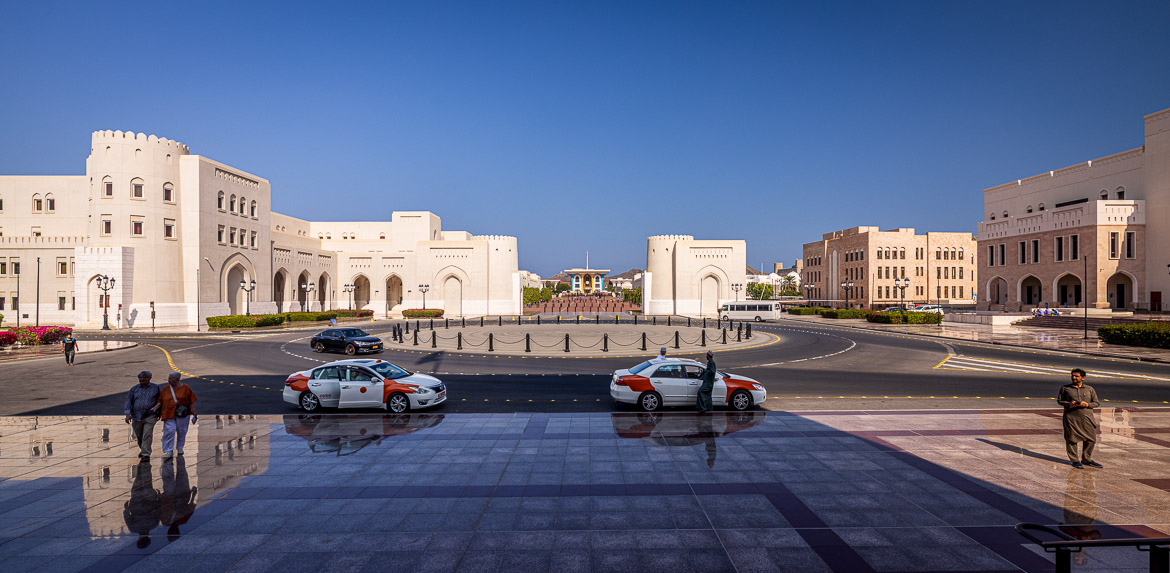
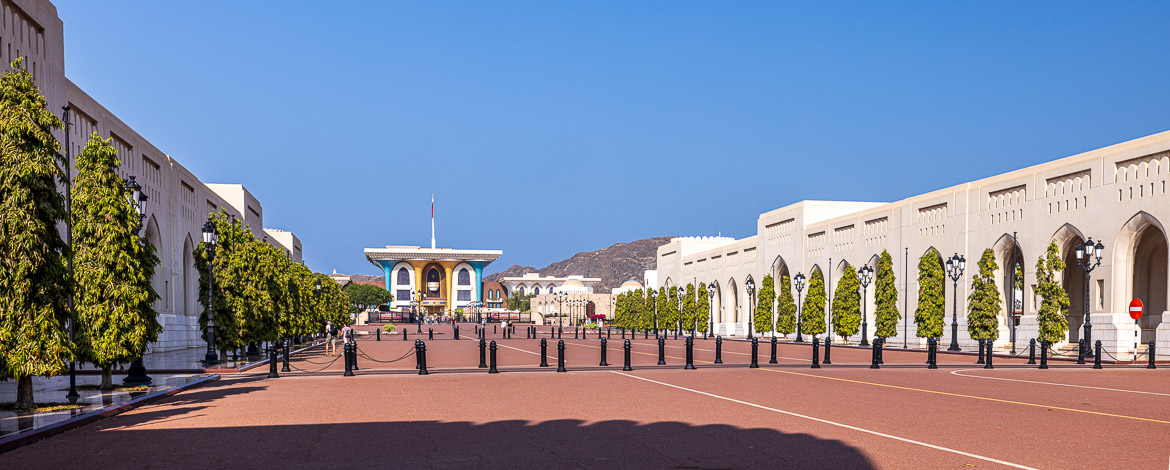
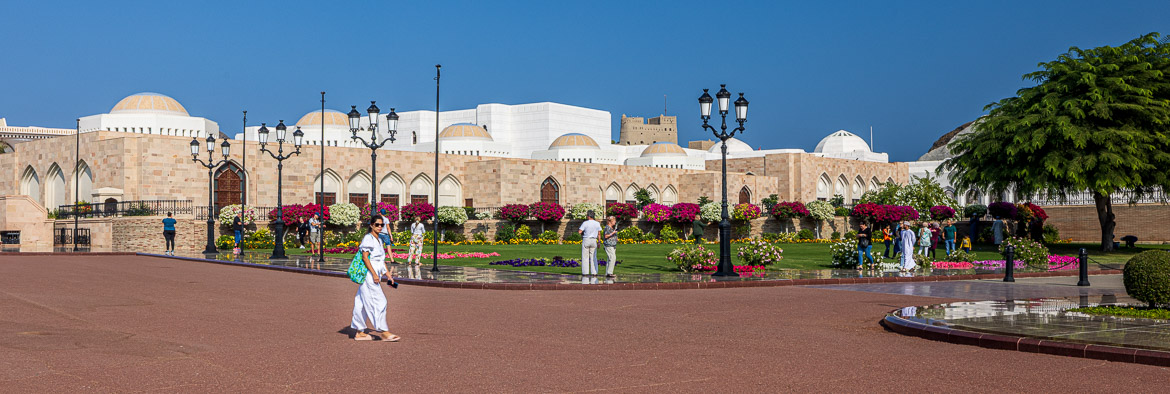
My posts from our visit in Oman will include several posts from the beautiful mountainous area inland, a plateau at an altitude of around 2,000 metres (with the peaks reaching up to more than 3,000 metres), and from the Omani desert. But I start with Muscat itself. Like in most Arab countries the metropolis that Muscat is today is a modern creation, in the case of Oman from 1970 onwards. The first post shows the Old Muscat, which actually is very new and modern with government quarters and the Al Alam palace (the Flag Palace; built 1972), where the sultan resides.
But this part of Muscat is also the original town from which the sultan extended his power but as in so many Arab countries not much is preserved of the original old Muscat.