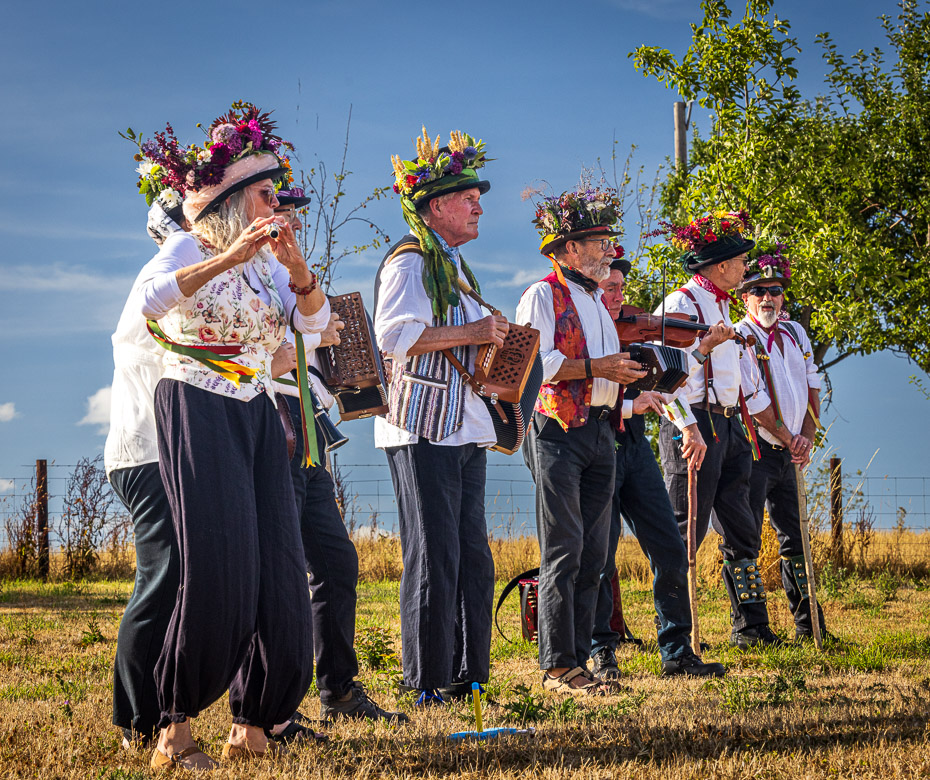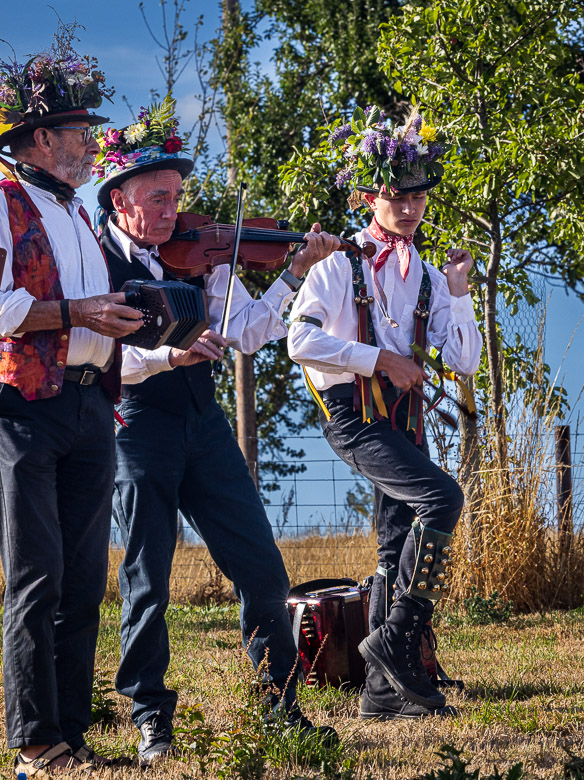
Newton Court is a local cider producer in the Leominster area, and they also have a restaurant – and of course offers cider tasting. They arranged an evening with BBQ and an ability to watch Morris Dancing. For us, who until that moment didn’t know what Morris dancing was, it was an opportunity to have fun and learn something new. We went with the whole family including my granddaughter Emily and we also invited our neighbours Angus and Sarah.
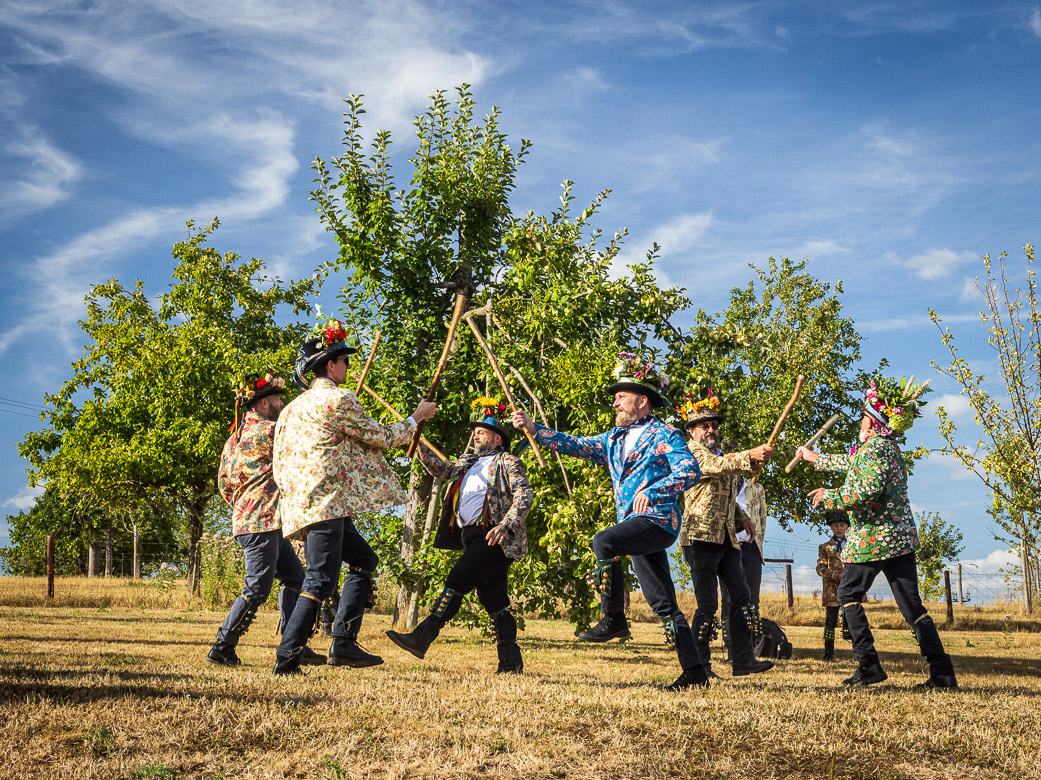
Morris dancing first appears in English written records in mid 15th C. The name likely derives from morisco or Moorish.This reflects the medieval European fashion for exotic court spectacles in colourful costumes, and the dancers often blackened their faces.
The earliest references place the Morris dance in a courtly setting, but it “travelled down” the classes and became part of rural folk dancing from mid 17th C. Cromwell suppressed this dance form but with the crown restored to Charles II in 1660 specially springtime festivals with Morris dancing were restored.
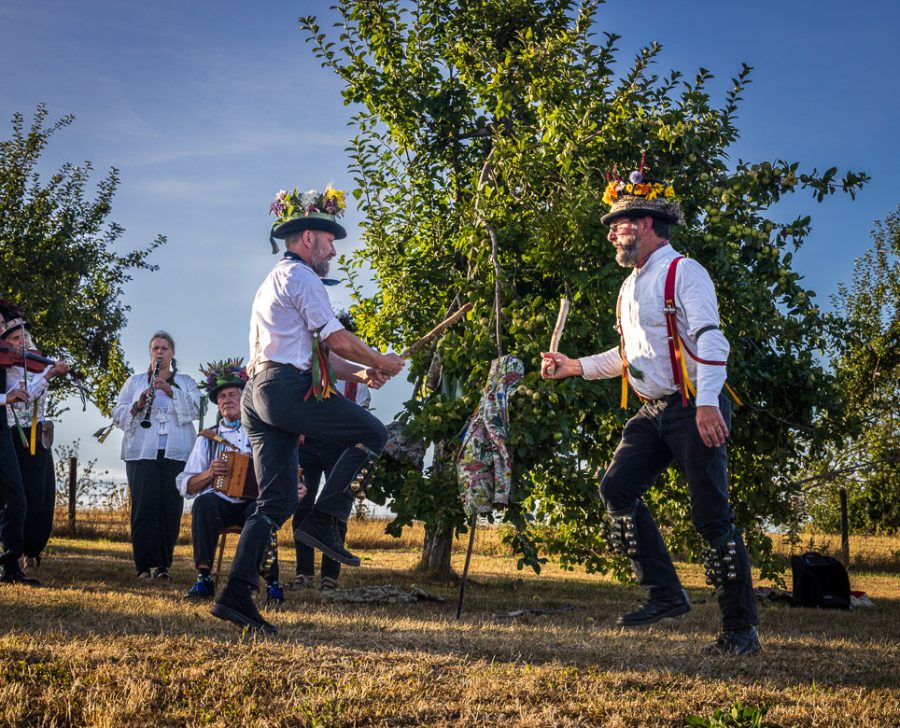
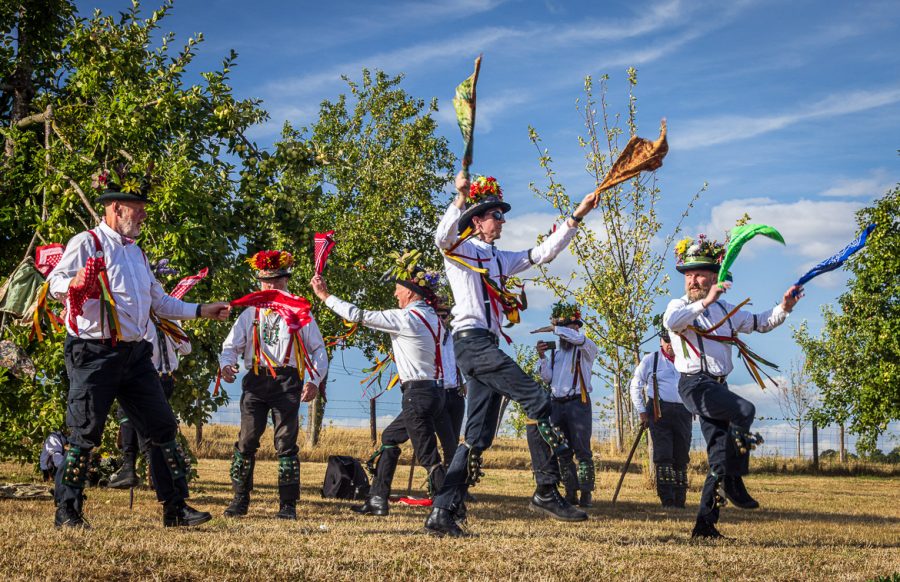
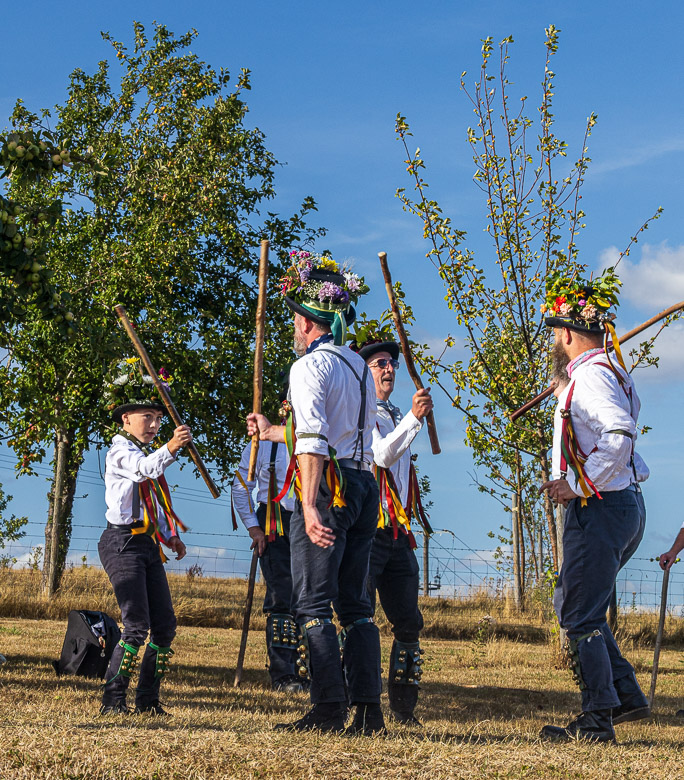
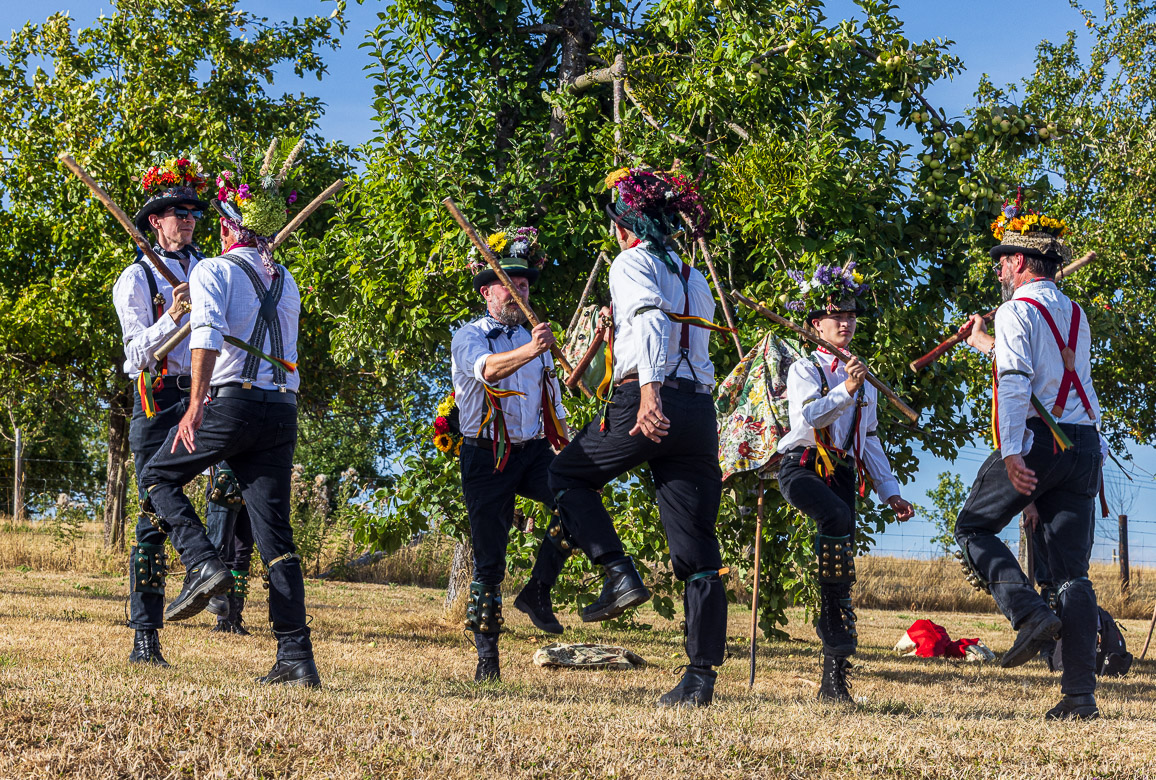
Traditionally only men participated, and the dancers we saw in Herefordshire were all men, although the musicians were both men and women. They are dressed in colourful costumes and wear bell pads on the shins. The Leominster Morris group were wearing very colourful flowery jackets and hats. This is part of the Border Morris tradition in Herefordshire, Shropshire and Worcestershire
They are also swinging sticks and handkerchiefs depending on the dance and cultural tradition. The Border Morris emphasises the stick dancing, clearly to be seen during our evening.