The Faroe Islands is an archipelago between Iceland in the northwest, Norway in the east, the Hebrides (part of Scotland) in the south and Shetland (also part of Scotland) in the southeast. It is an autonomous territory of the Kingdom of Denmark. It has around 55,000 inhabitants and a lot more sheep.
Although they are far north, roughly the same latitude as Bergen, they are fairly warm due to the Gulf Stream. It is also a very wet archipelago – Torshavn, the capital, holds the dubious record of having he least recorded hours of sunshine of any city in the world.
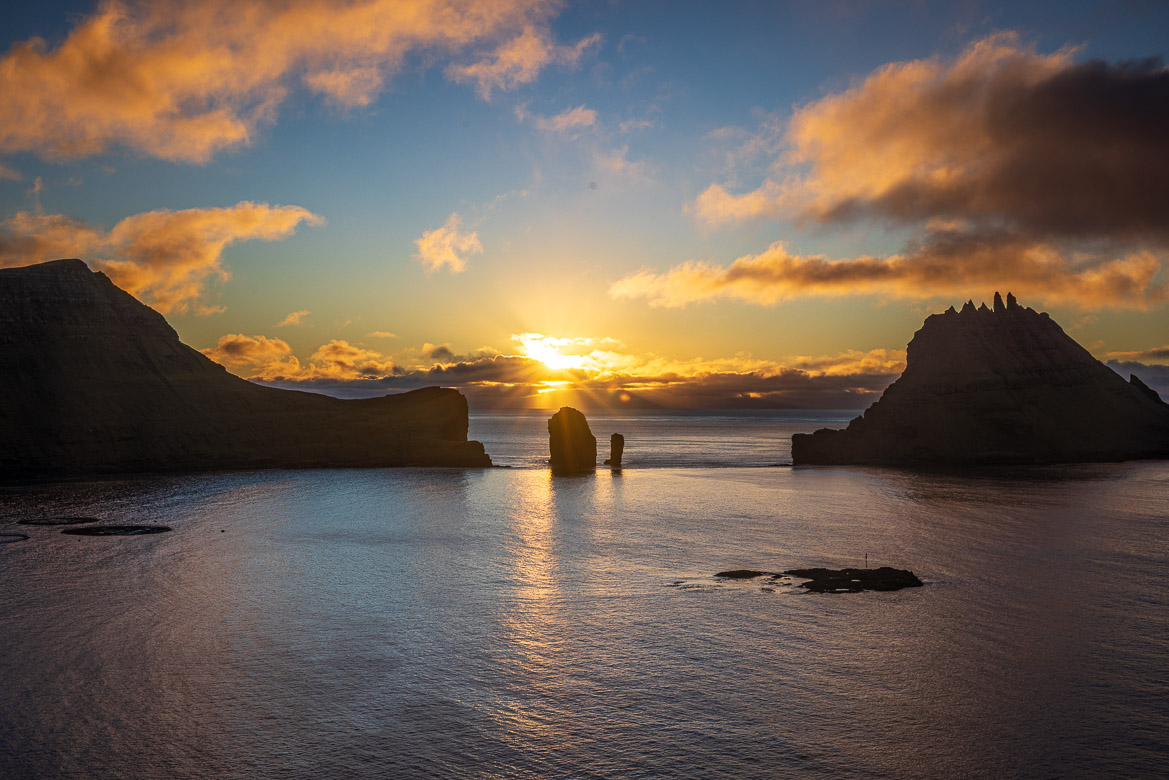
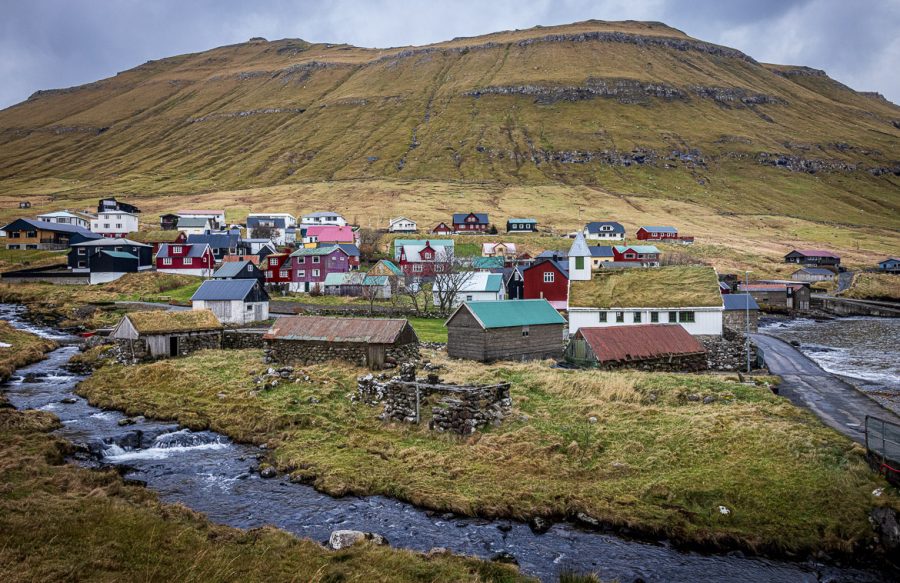
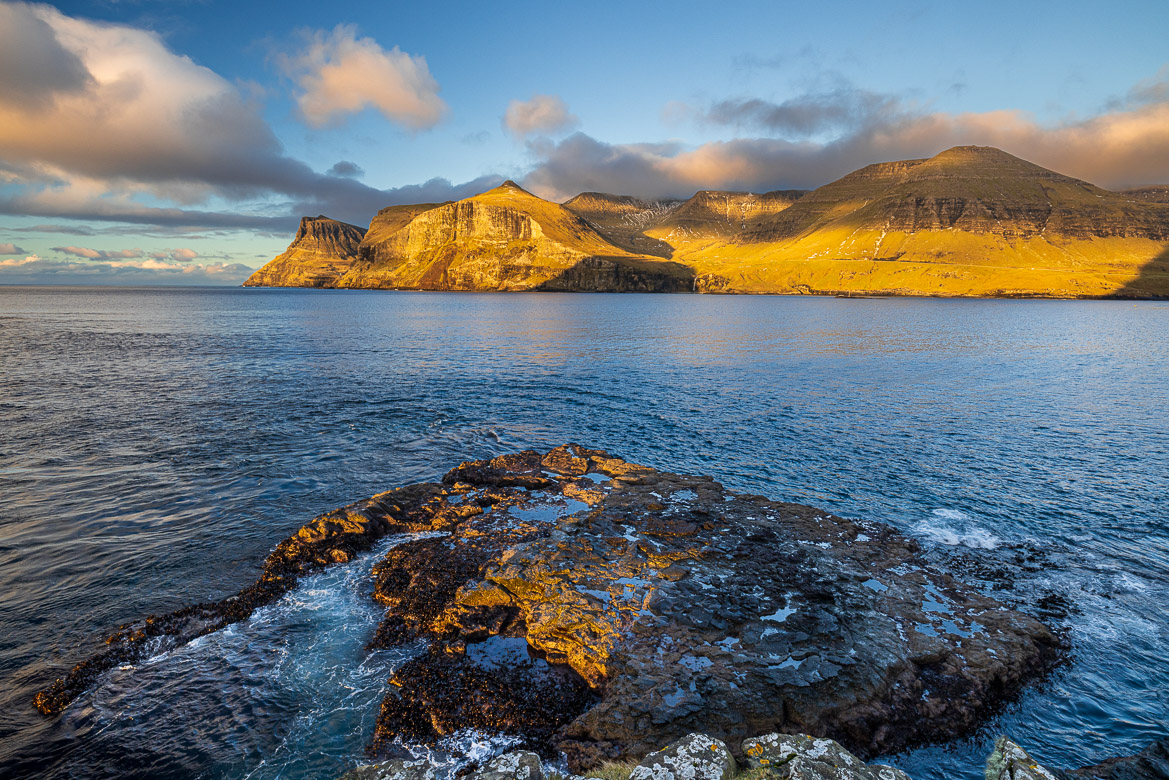
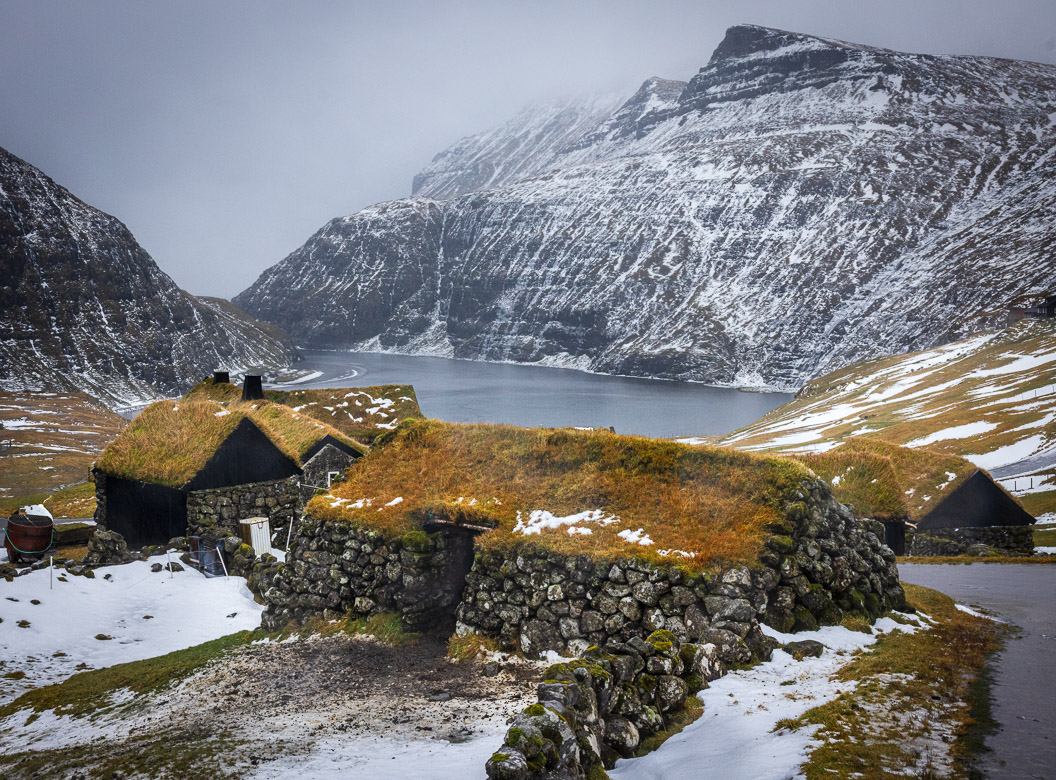
The Faroes are very rugged with cliffs shooting straight up from the sea several hundred metres, fjords breaking into the islands, sometimes nearly splitting them up and hardly any trees. The islands are very green in summer and yellow/brown/ orange in winter, when the grass has died or white when they are covered in snow.
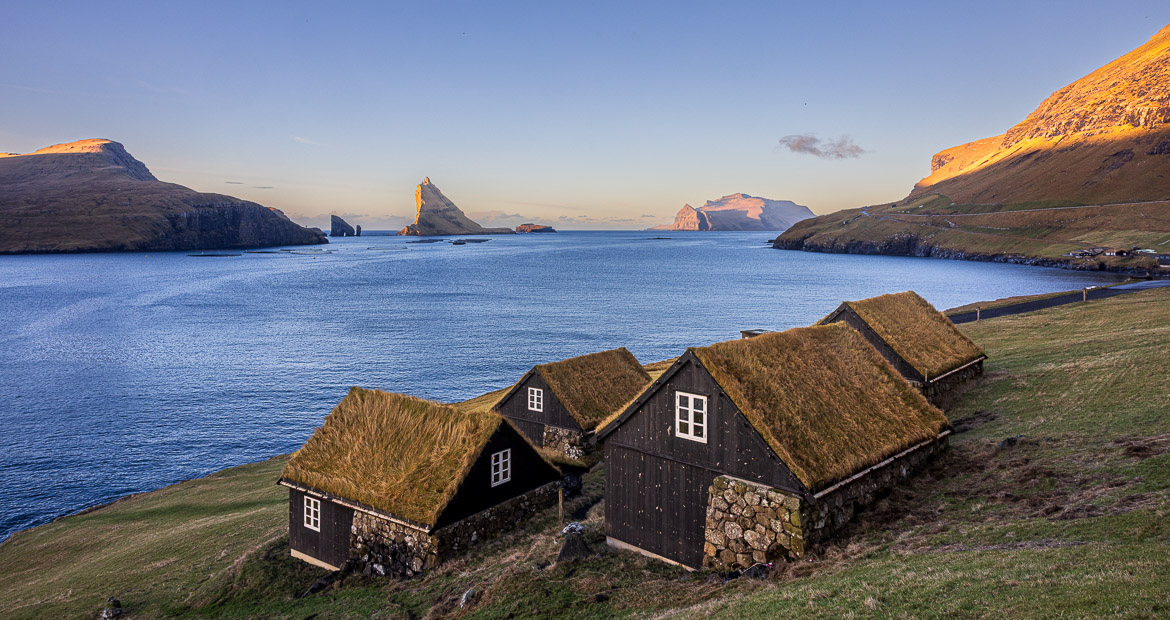
The first inhabitants were probably some Celtic monks and a few other Celtic settlers from around mid fourth to med sixth centuries. They were followed by the first Norse-speaking inhabitants (Vikings) in the early 9th C. They spoke an Old West Norse dialect which later evolved into the modern Faroese language.
Jennifer and I visited the islands during 9 days in November this year (2025). We flew in via Copenhagen, but you can also fly from Edinburgh certain days of the week. We stayed at a very nice hotel just outside Torshavn, The Føroyar, on a hill overlooking the small capital of 20,000 inhabitants. During a part of our trip we joined a group of photographers, many of which we had met before. Some places we discovered on our own, but at other locations we had the guidance of Mark McColl, whom had put the photography trip together. And in the evening we joined in a number of exquisite dinners at different places. We were not prepared for all the pleasant restaurants in Torshavn still open in November. But outside Torshavn we mainly had hot dogs bought at petrol stations that also served as small shops and cafés.
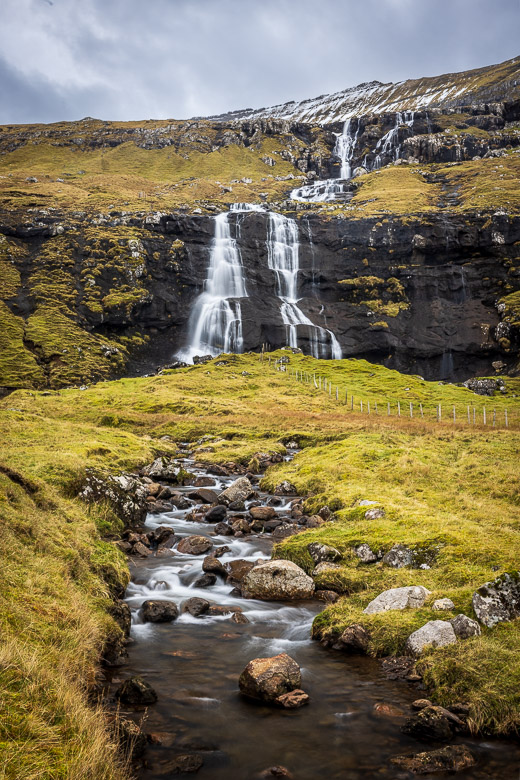
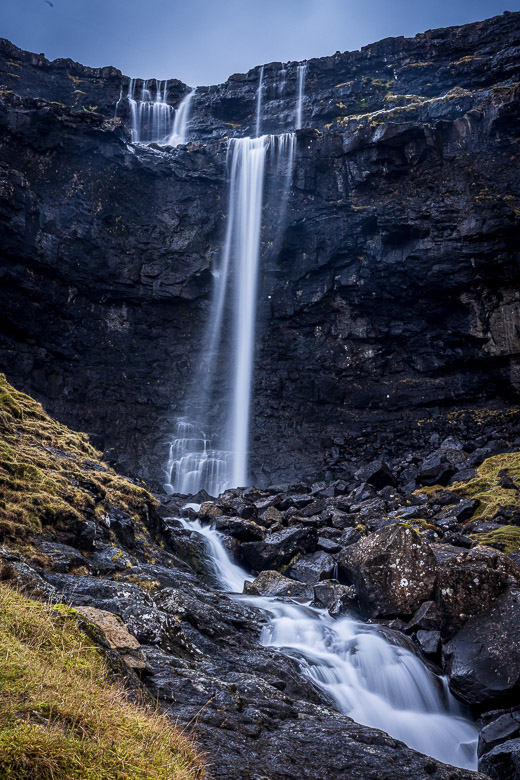
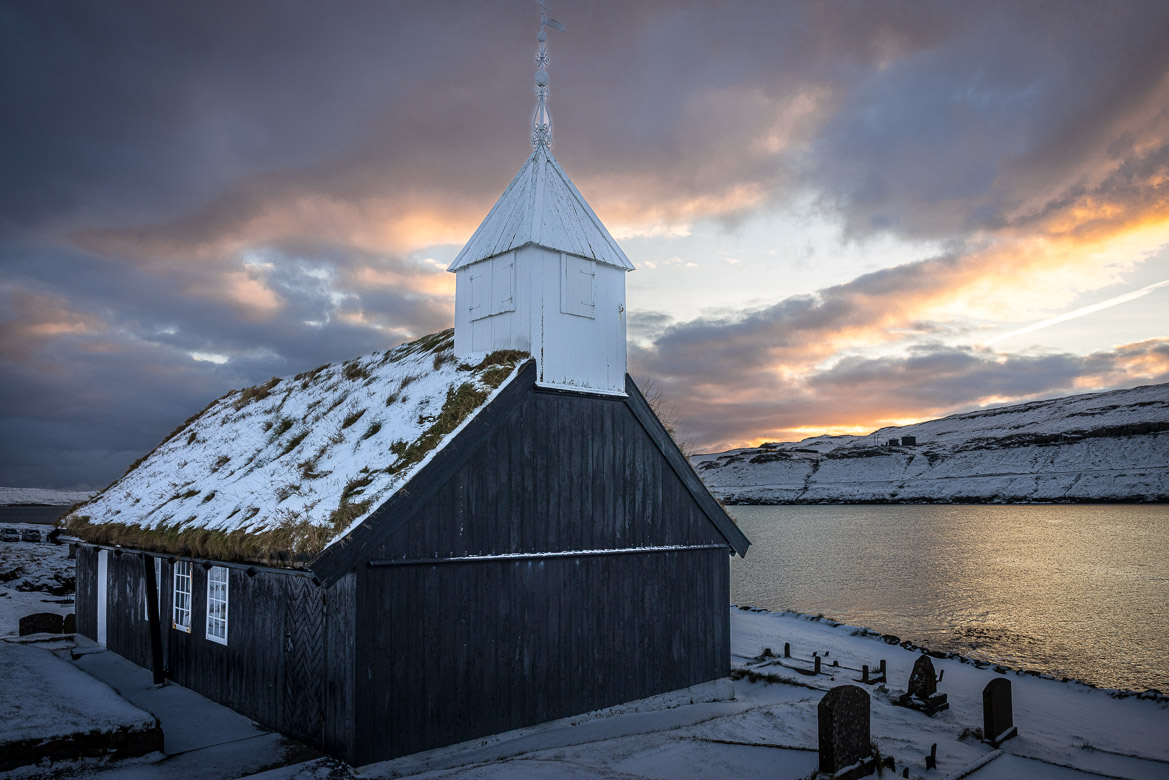
There is water everywhere, in the sea and fjords, in the rivers and waterfalls, and of course, in the form of rain hitting us from above or whipping us from the side due to the hard winds. The traditional buildings are built of wood protected by black tar with the roofs covered I turf.
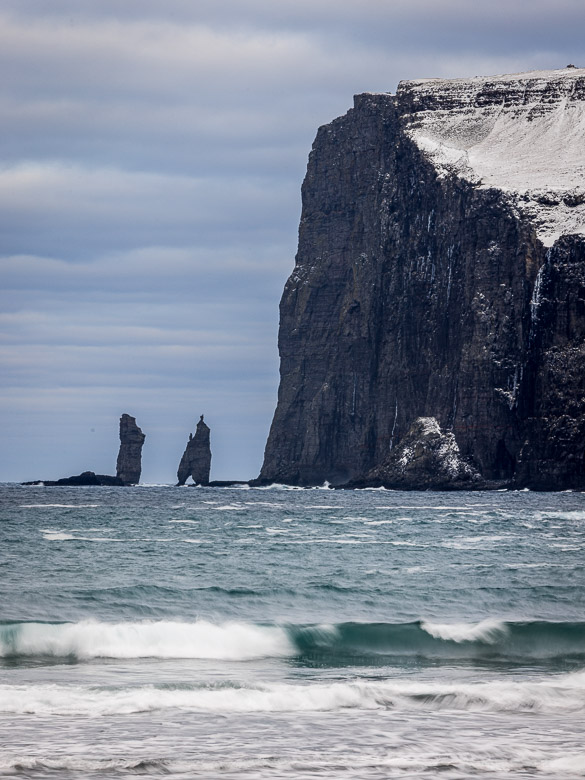
In this first post I will try to give you a taste of the Faroe Islands with a few images. The following posts during a couple of months will show the different islands place by place. Jennifer and I visited only three out of the 18 islands that constitute the Faroes, but they are the three largest and, I believe, quite representative for the whole archipelago. I will start with the most populated, Streymoy, named after the strong currents that runs along the island and then we move both east and west from there.