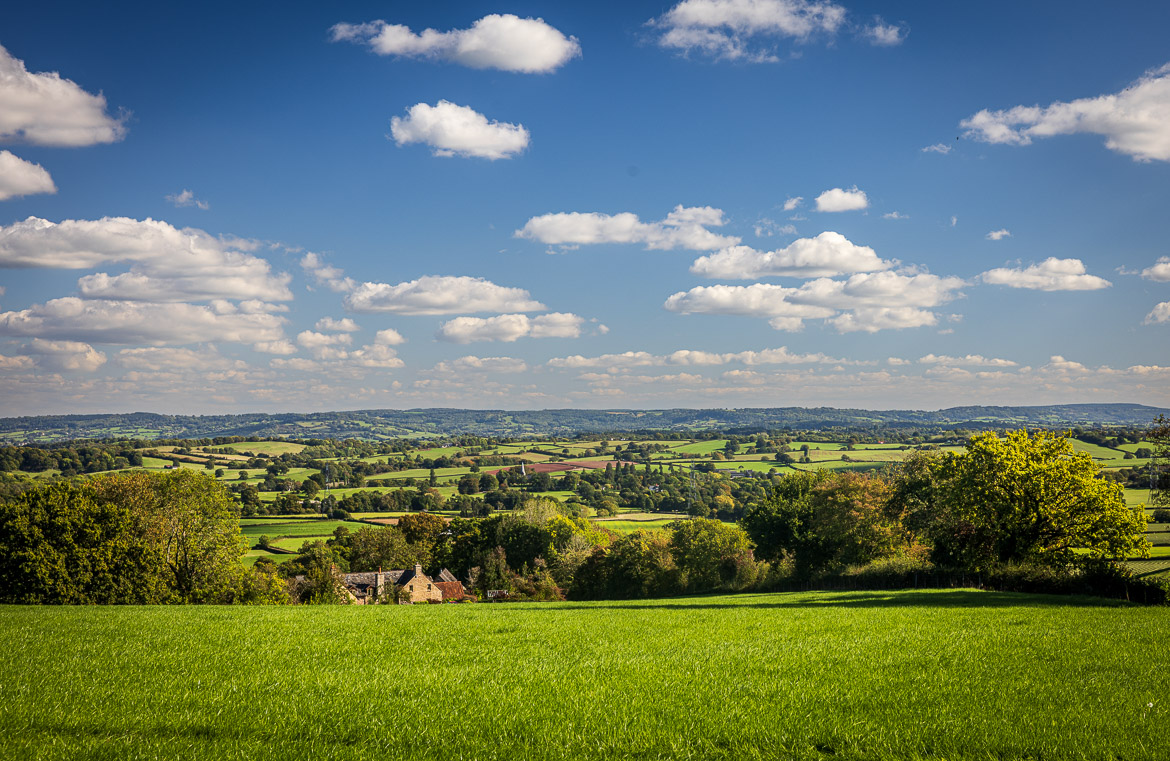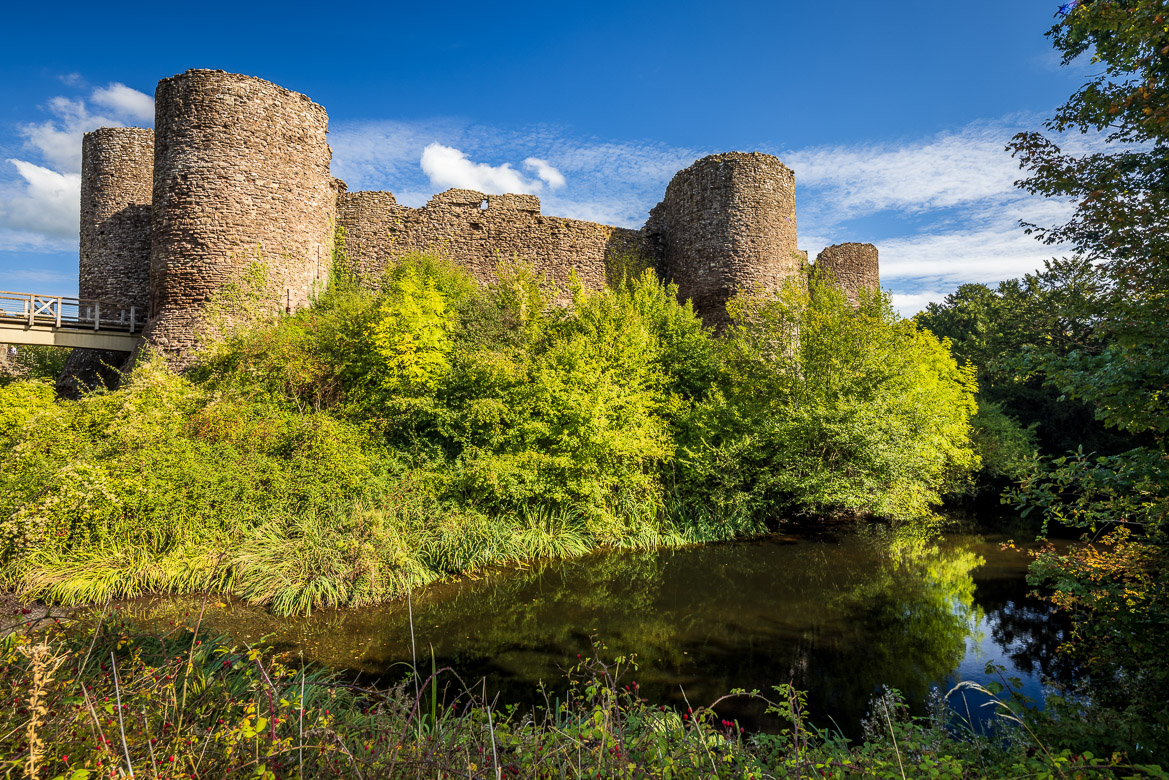
The best preserved and most imposing of the Three Castles (For my story about the Three Castles, see my previous post). Standing very remote, on a hill overlooking the valley far below. It has an outer ward which is as large as a football pitch, erected for keeping a large military force that could ride out to sort out skirmishes in the Marches.
Its medieval name might derive from the white rendering used on its masonry.
The inner ward is protected by a moat still filled with water, and the castle and moat made a very attractive composition on the day I visited (see my first photo).
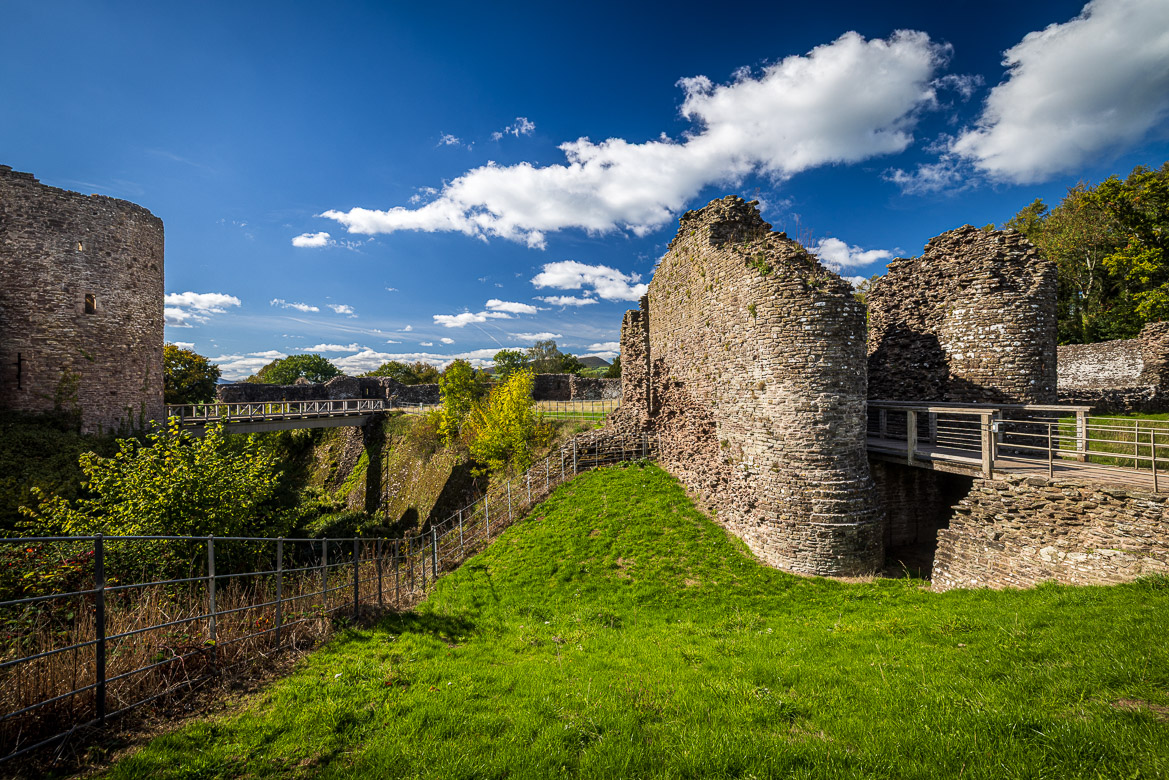
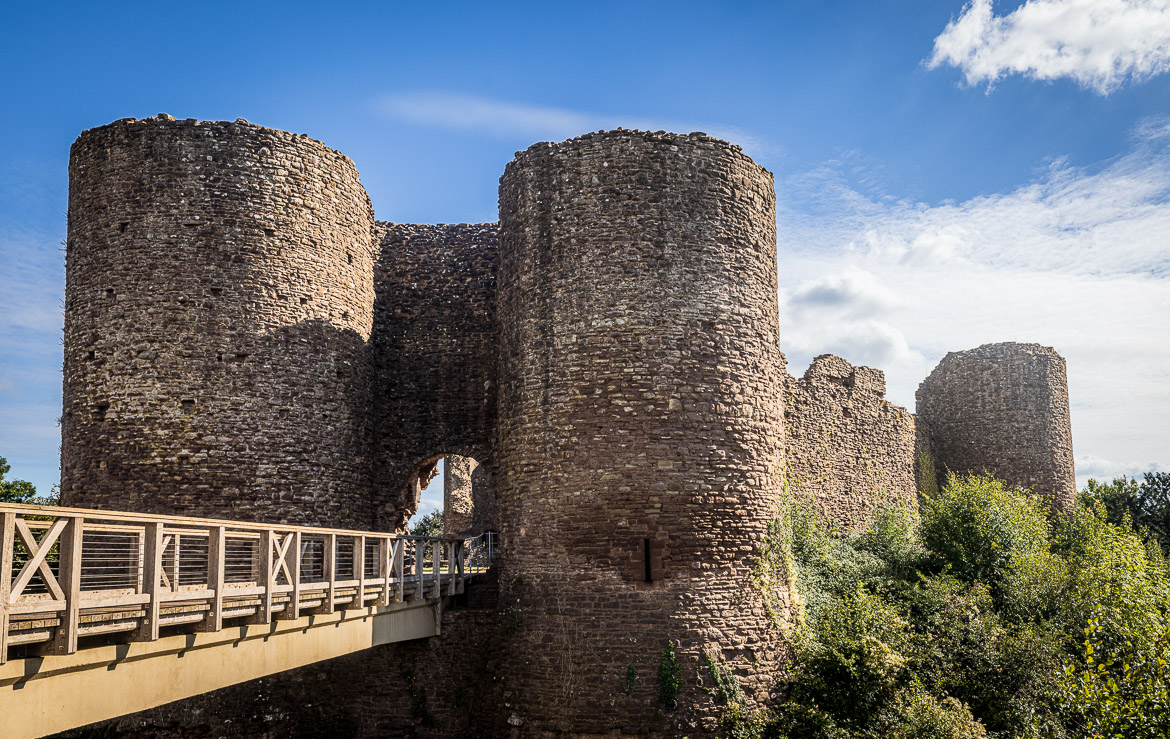
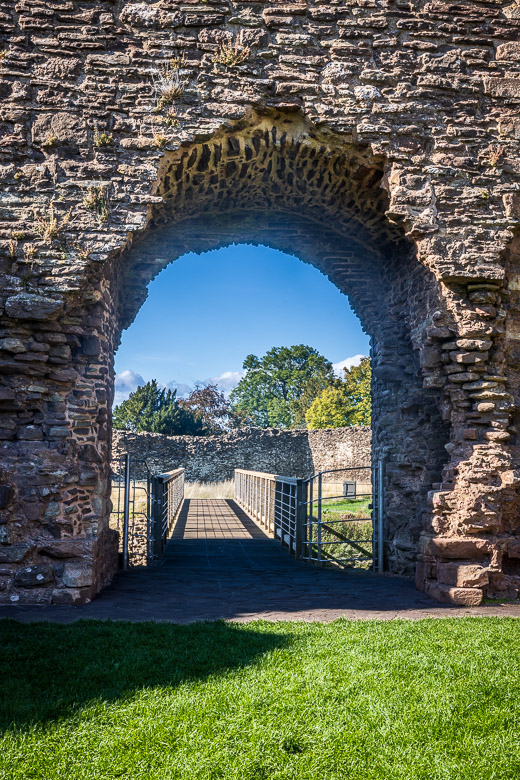
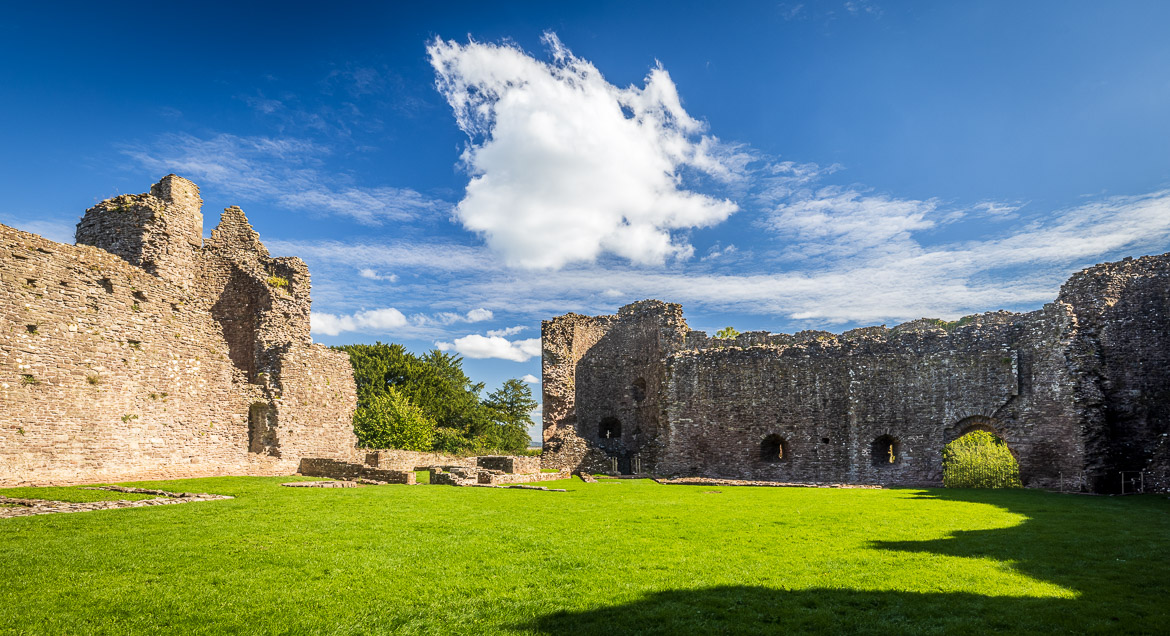
Much of what remains to be seen now heralds from Lord Edward (later King Edward I), son of Henry III, who took possession of the Three Castles in 1254. He continued to build a series of impressive castles in North Wales, and White Castle can be seen as a forerunner of these castles, where he tested several designs.
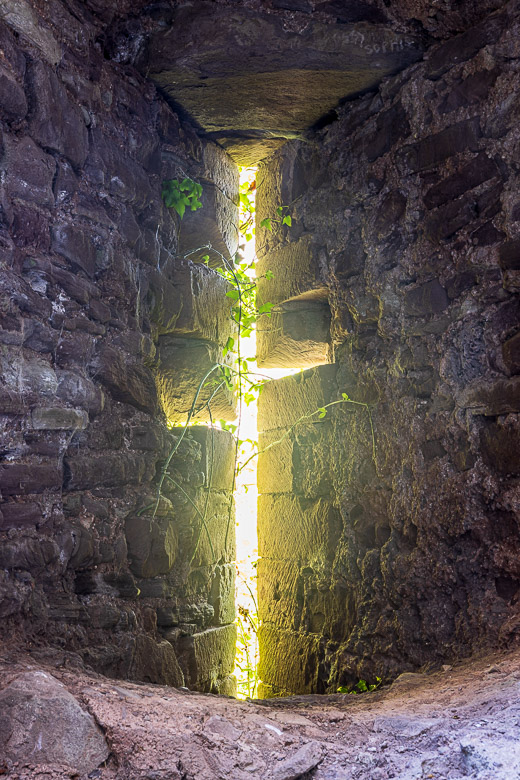
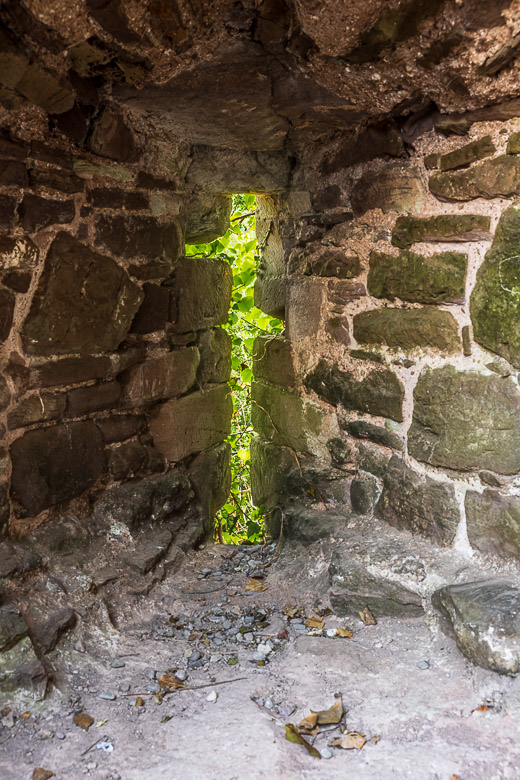
One such unique design is the unusual arrow loops. Those windows or arrow loops normally look like a cross, but at White Castle the horizontal openings are not on the same level but placed at different heights to make it safer from an attack by an enemy. See my photographs.