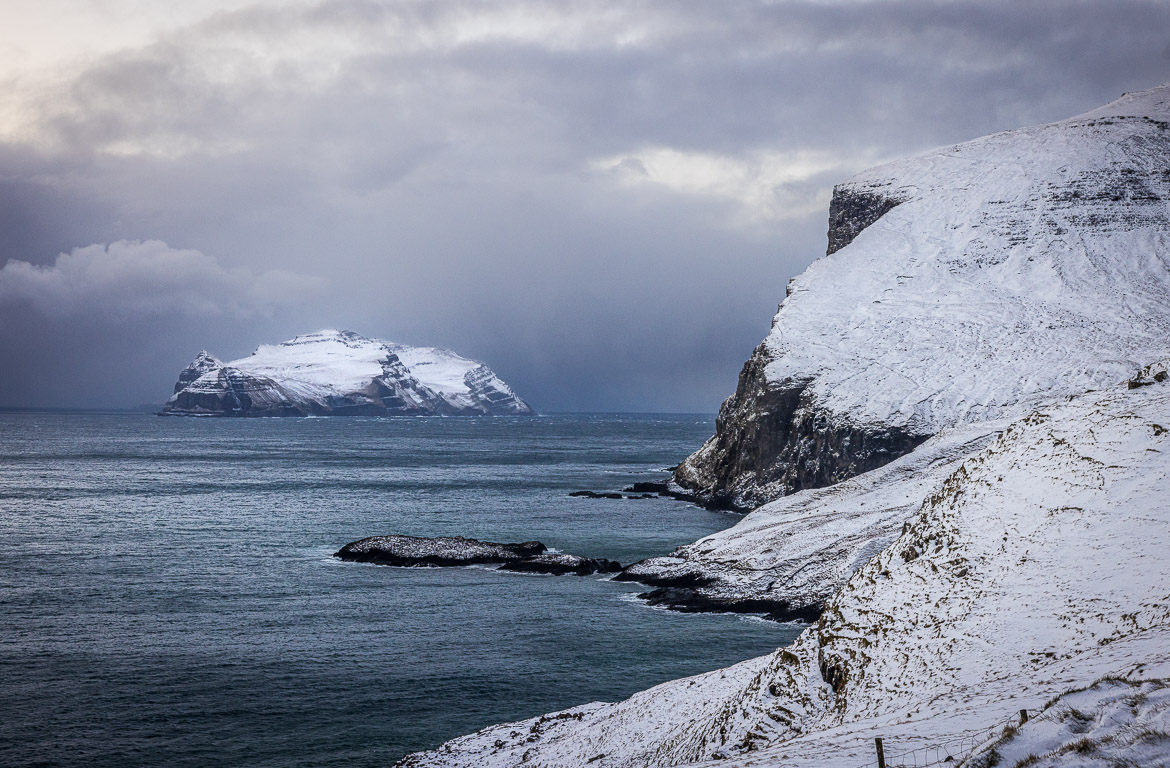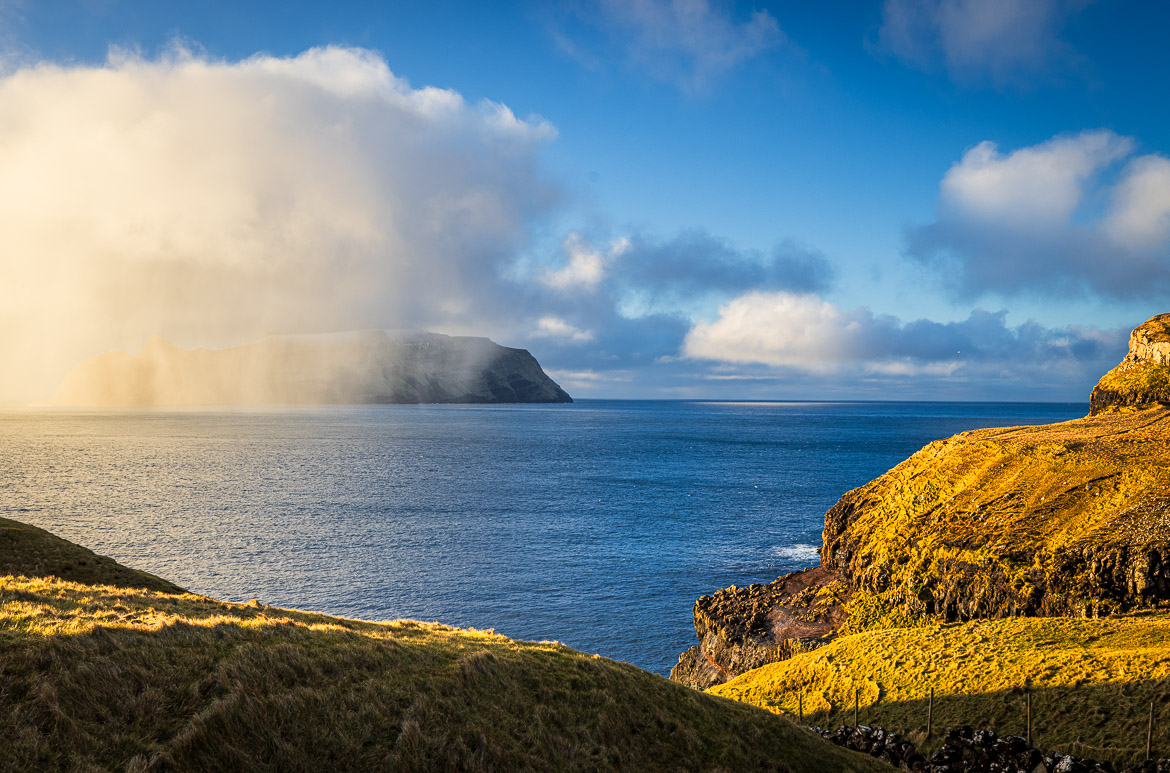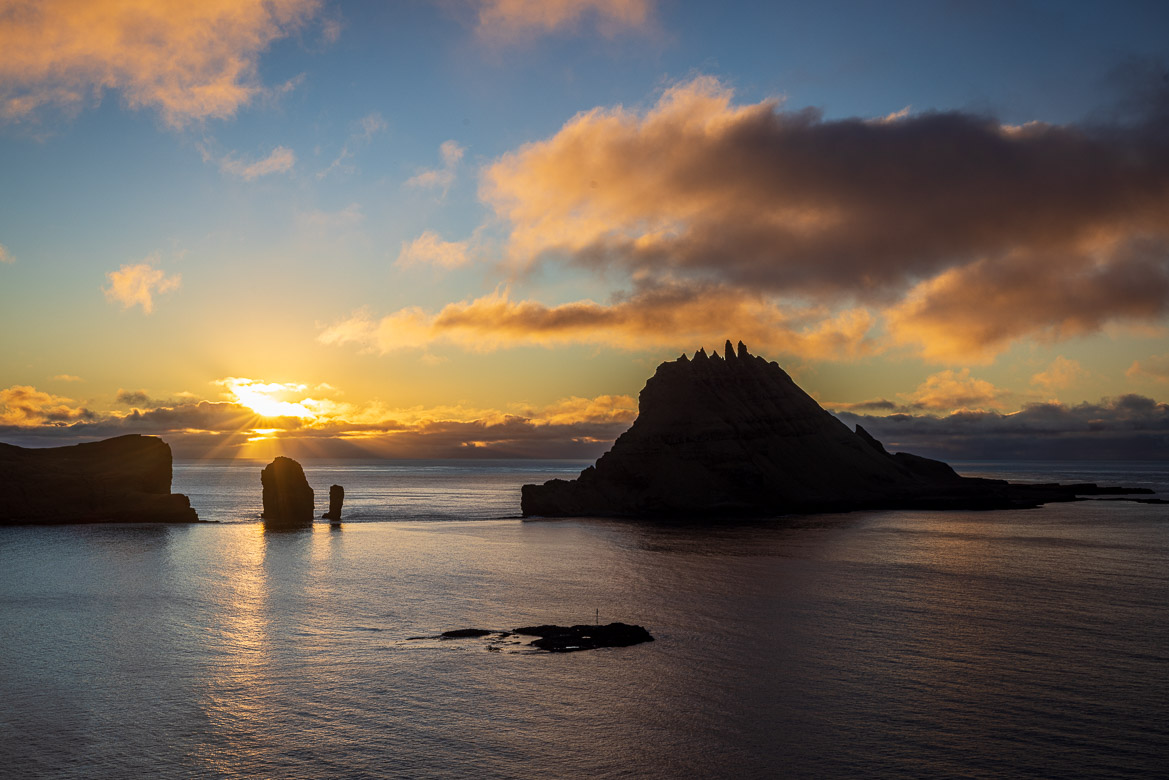
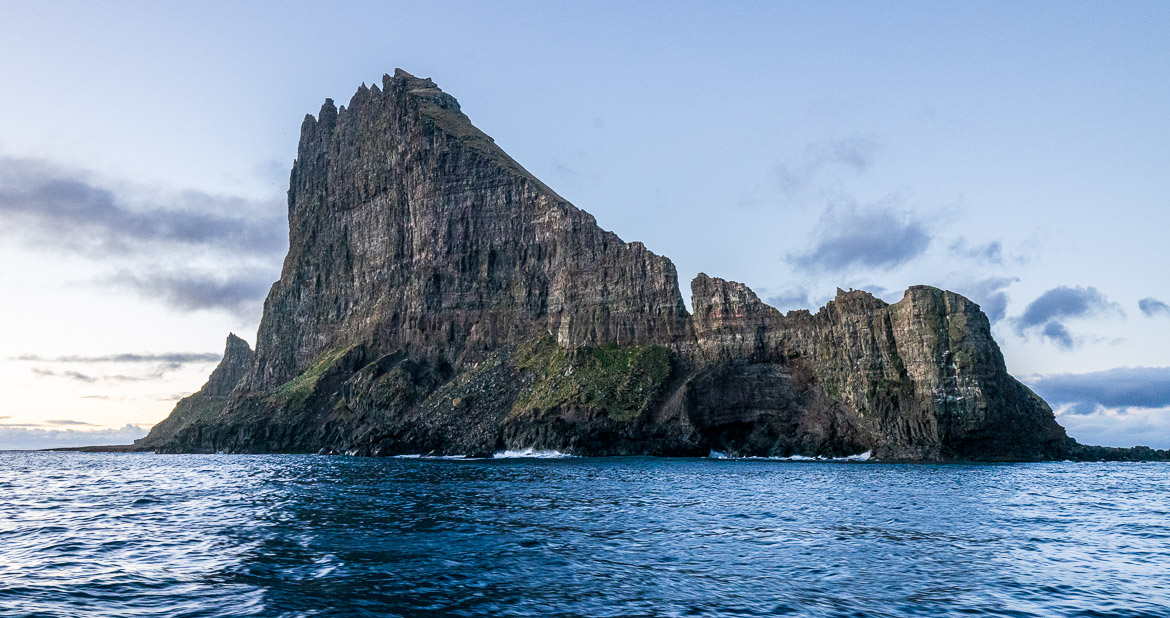
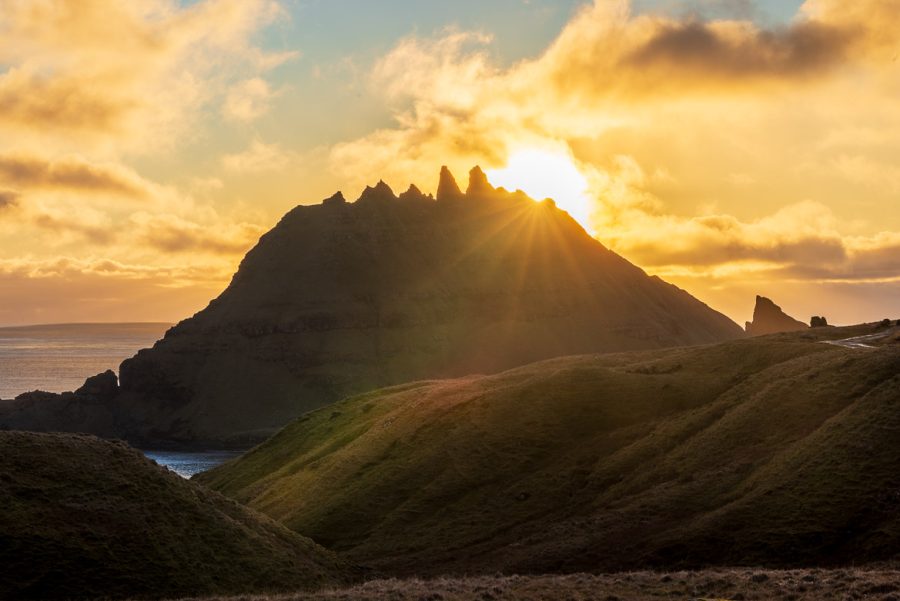
We move from the two larger islands, Streymoy and Eysturoy, to the last island we are going to visit, Vágar. Vágar is smaller and less dramatic, but surrounded by some beautiful scenery. We start by visiting another fjord, Sørvágsfjørður, and the view over the surrounding islands and sea stacks including the most dramatic island, Tindhólmur. Tindhólmur is tiny and uninhabited, but has dramatic peaks that far away looks like a medieval crenelated fort. Admittedly you have to have some imagination to see the dragons and legends defending this fort, but who hasn’t imagination?
The north side of Tindhólmur is steep to (and that is the side we are seeing most of in my pictures) but it is more sloping down towards the south and west sides. The fantasy film, How to Train Your Dragon, was set on Tindhólmur as the Isle of Berk. And I can easily see a dragon feeling at home on Tindhólmur.
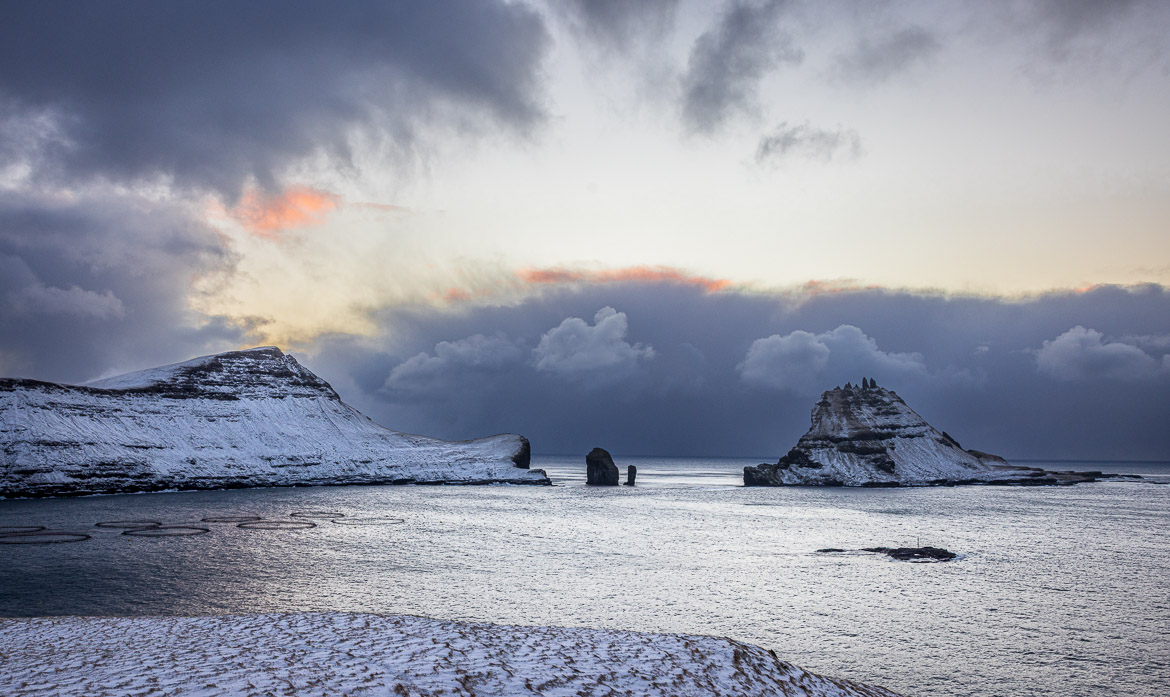
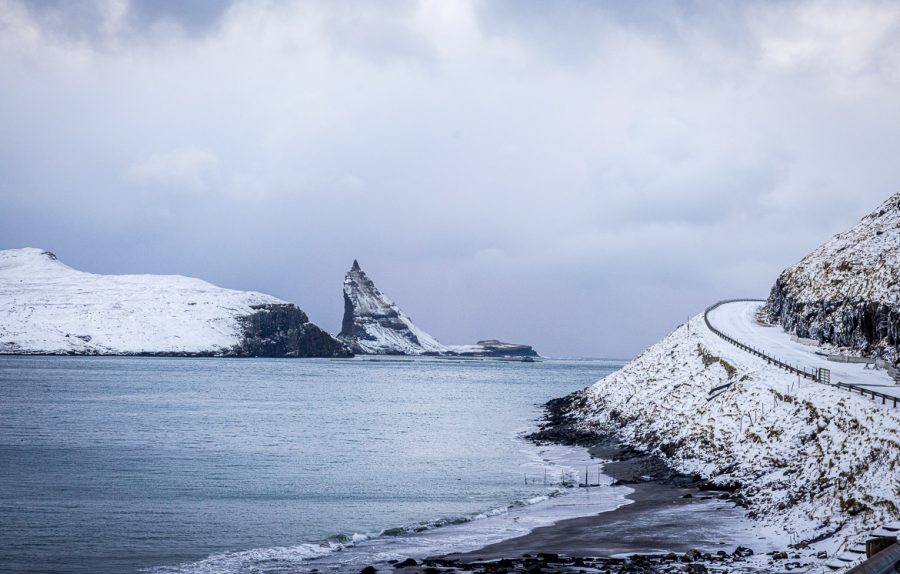
The fist time we came to Sørvágsfjørður, the sun had already set, although the clouds were still bathed in the orange colour from the sunset. And the snow covered the islands.
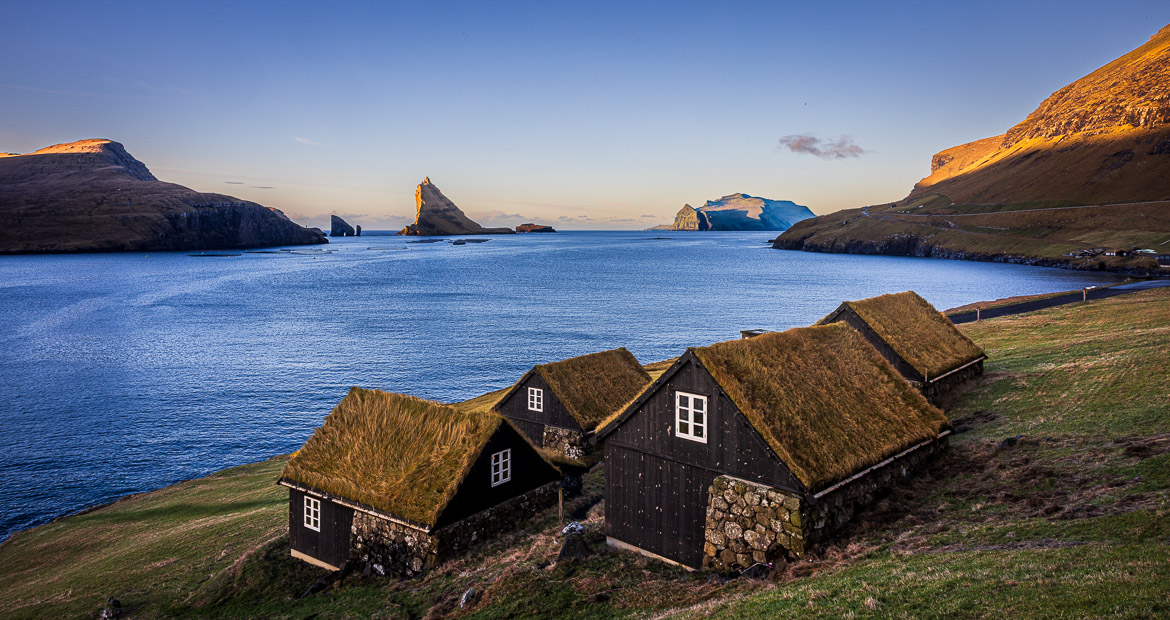
Mykines, which can be seen in the photo above, is the westernmost island in the Faroese archipelago. It is home to large puffin colonies during summer (125,000 pairs), but we didn’t visit it now in November. The name, Mykines, may predate the Norse epoch and be Irish in origin. It may be a reference to whales, which are known as mucmhara in Irish. We know that early settlers inhabited Mykines in 625, possibly monks and hermits, long before the Norse emigrated to the Faroe Islands.