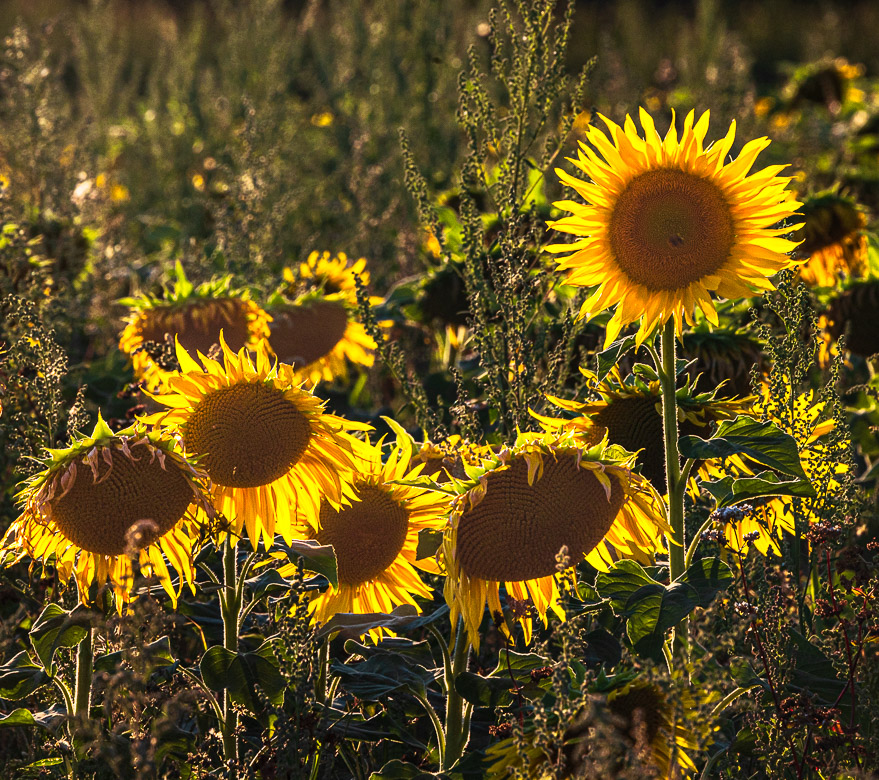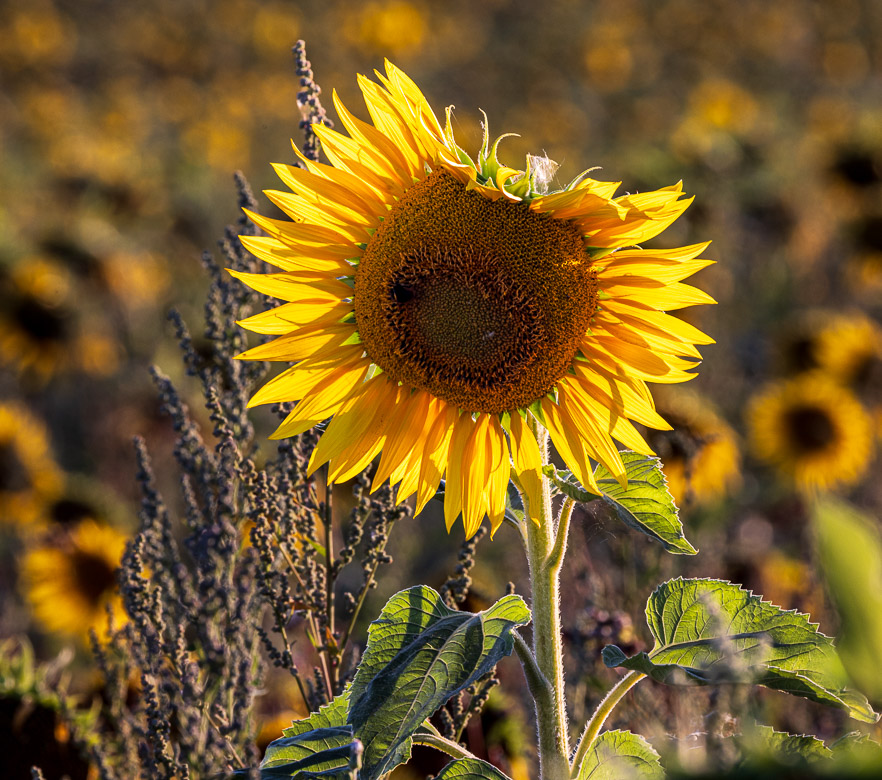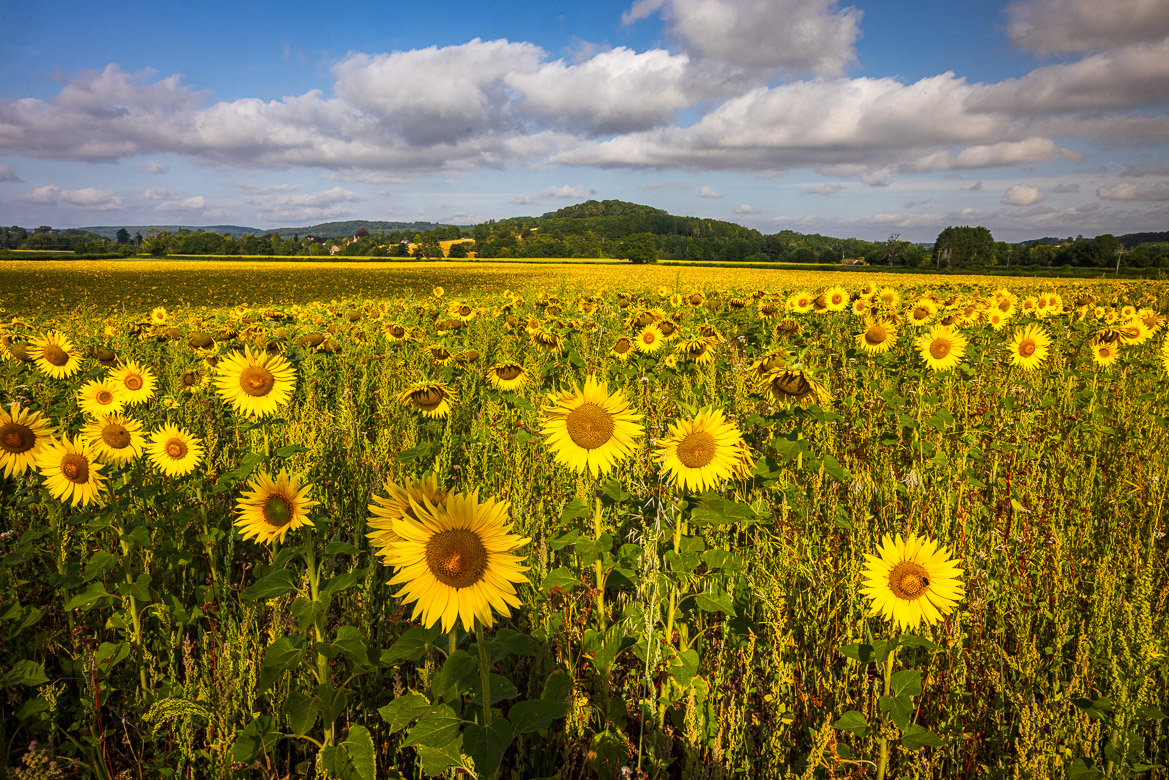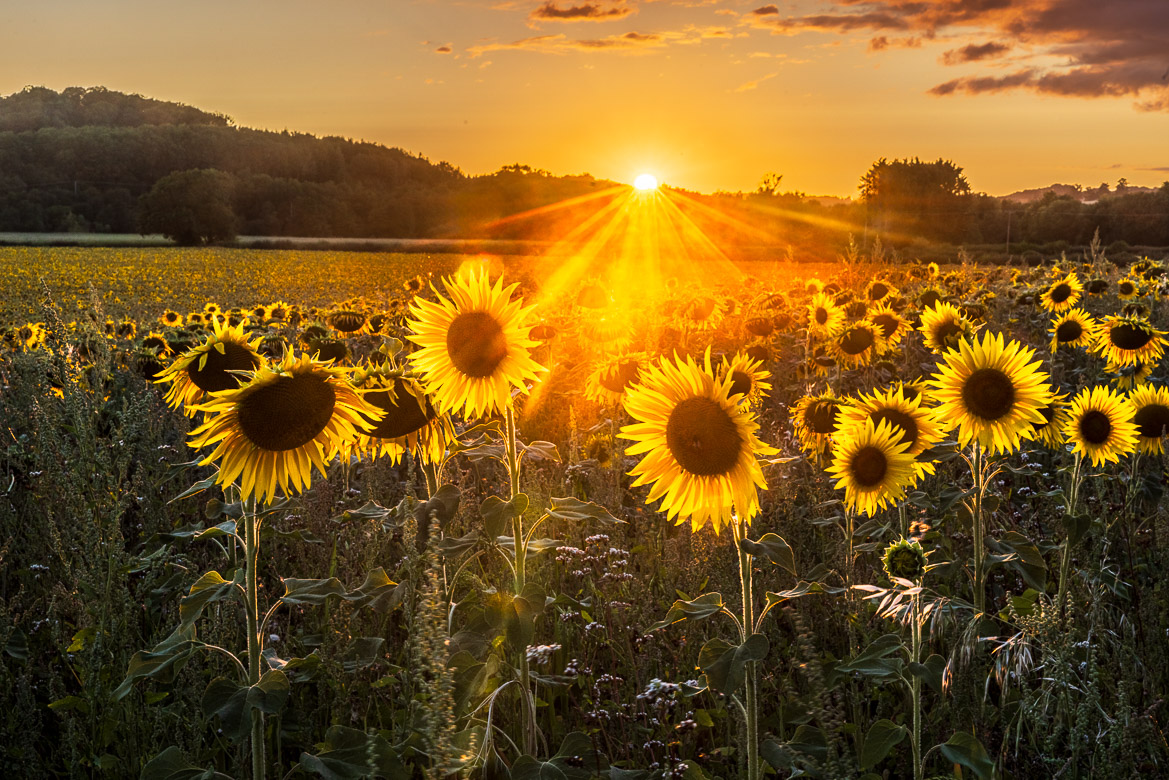
There is a very large field of sunflowers near Bodenham, not far from where we live in Herefordshire. I have been there three times to capture the flowers in different light.
Sunflowers first originated in the Americas in what is now known as Arizona and New Mexico and they have a large variety of uses. They were and still are cultivated as a food source. Early Americans used the seeds to crush into flour for bread. The seeds can also be eaten as a snack or mixed with other oats and grains to make a type of granola.
The sunflowers spread to Europe and in the 18th C they became specially popular around Russia and Ukraine as the Russian Orthodox Church banned food containing oil during Lent. Except sunflower oil. By the early 19th C Russian farmers had grown over 2 million acres of sunflowers! Sunflowers are now widely grown globally and represent the fourth most used vegetable oil in the world. Russia and Ukraine together produce more than half of the worldwide sunflower seed production.
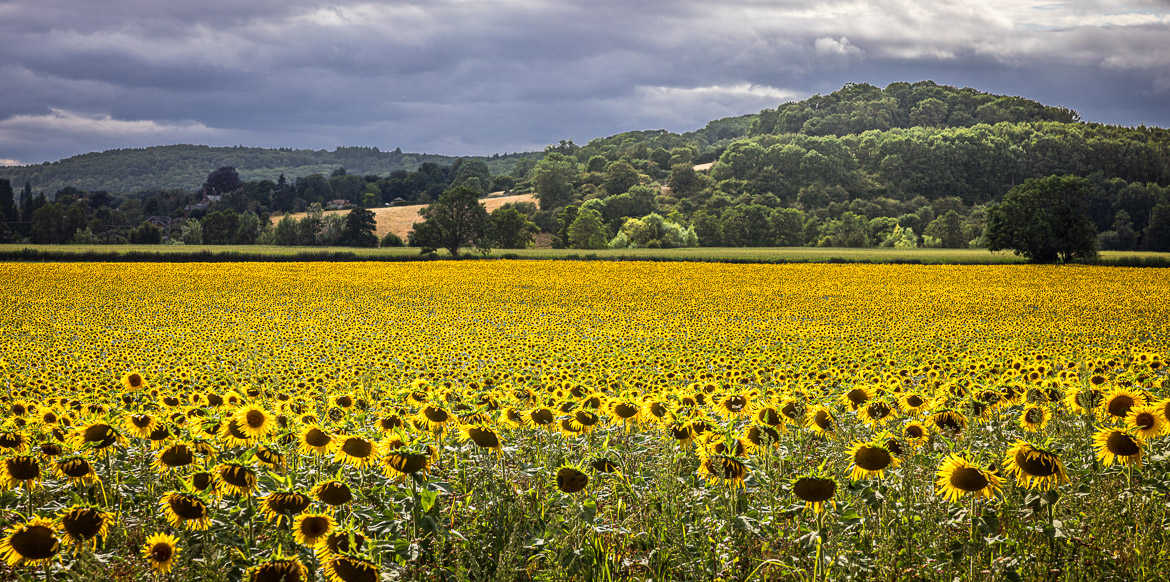
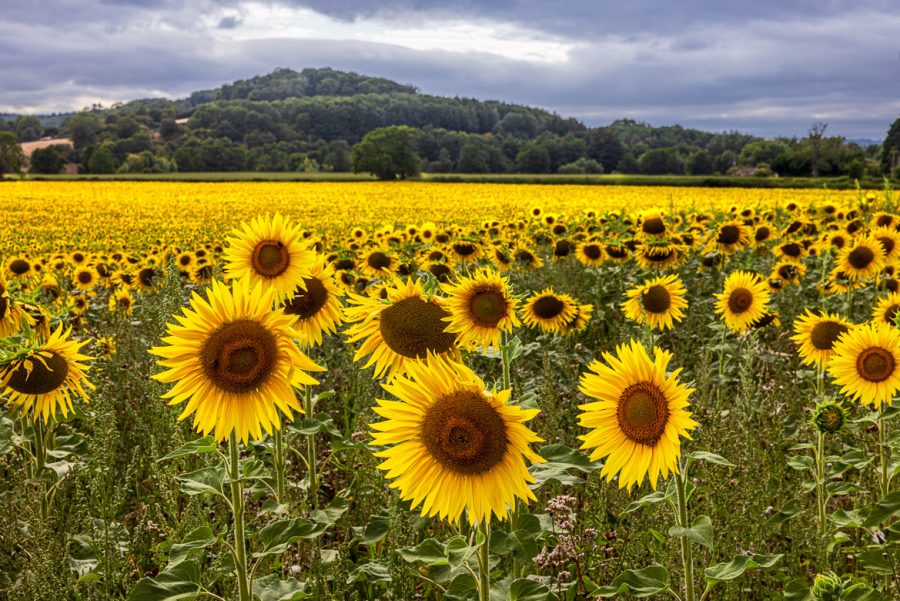
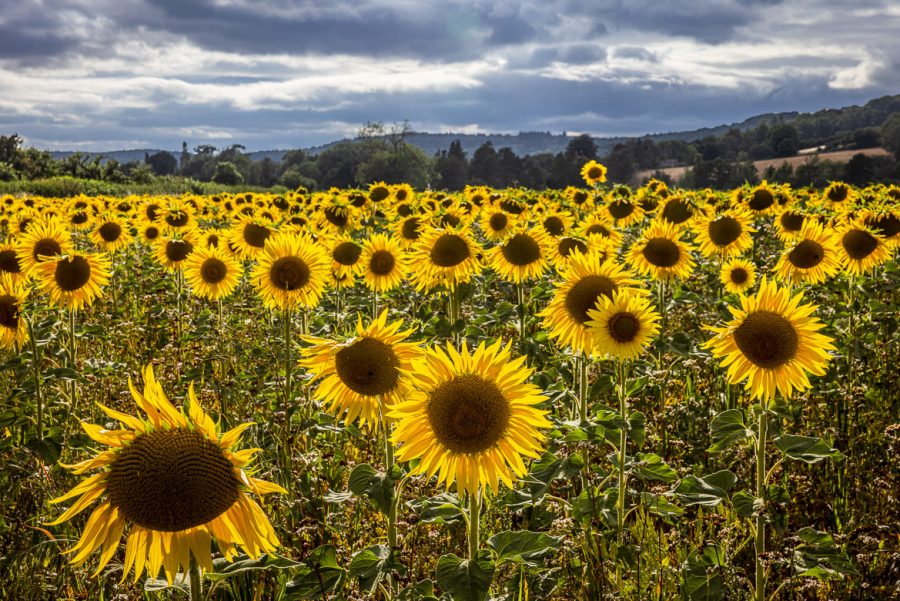
A sunflower is actually not one flower, but contains around one to two thousand individual flowers. What looks like one giant bloom is a composite head made up of two types of tiny flowers called florets. The disk florets are the tiny fertile flowers clustered in the dark centre. They are the ones maturing into sunflower seeds. they are arranged in a mathematically precise Fibonacci spiral, which got me fascinated, when I first read about them. The bright yellow “petals” surrounding the dark centre are the ray florets. They are sterile, single-petalled flowers designed to attract pollinators.
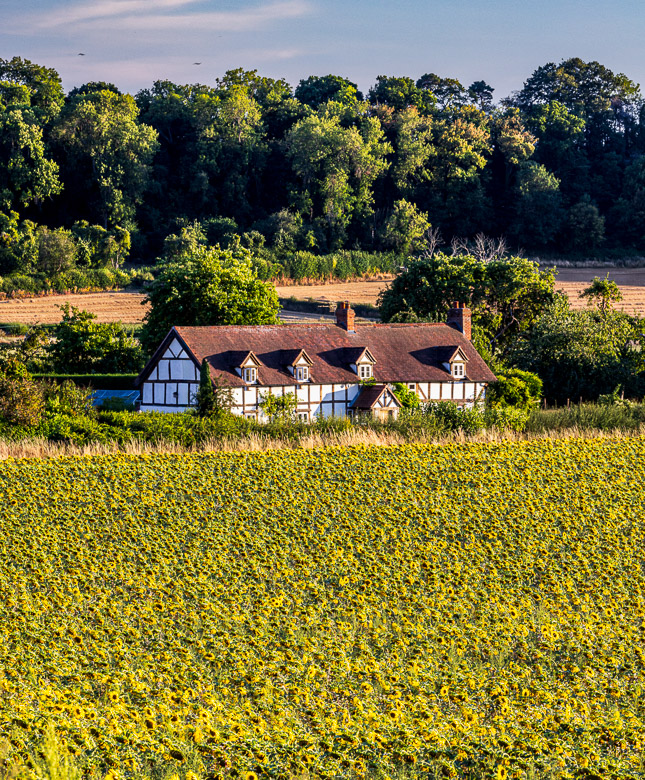
The young sunflowers track the sun from east to west. Overnight the west side of the stem grows faster twisting the flower back towards the east again, ready for the first morning sun rays from the east. The plants have an internal biological clock. But as the flower grows older it looses its ability to track the sun and instead they are permanently facing east, which helps them warm up faster in the morning and attract more pollinators. The field I photographed had mature sunflowers always facing eastwards.